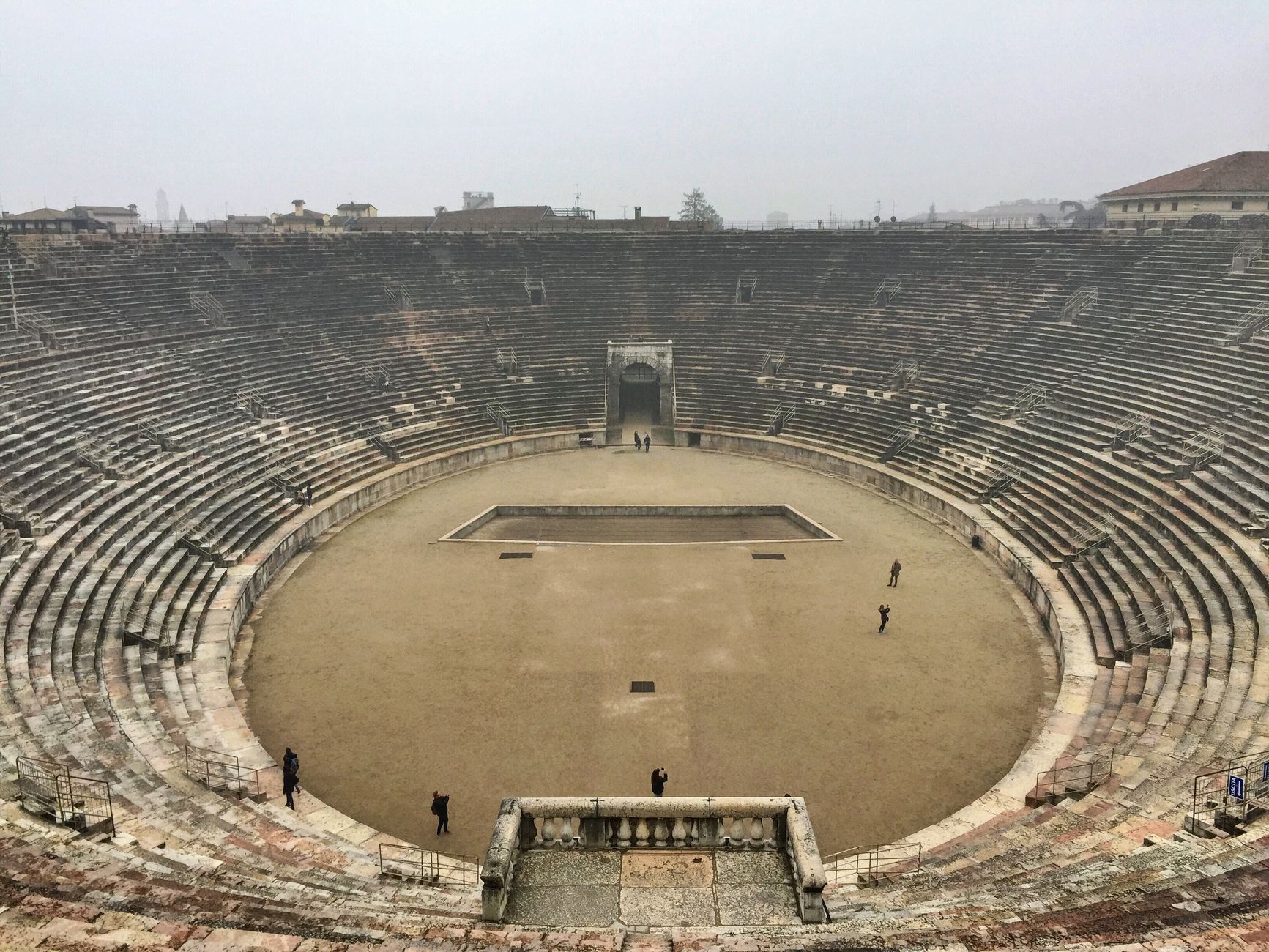
Verona is far more than Romeo and Juliet's stage: it's a limestone amphitheatre where two millennia of history breathe in cobbled streets and an ancient arena where gladiators once fought. Beyond the city walls, Valpolicella unfolds—terraced hillsides draped in vineyards where Bardolino and Amarone tell their story in medieval villages frozen in time.
The Landscape
Verona sits on the Adige river's banks, sheltered by the Prealps that frame endless vistas. Northeast spreads Valpolicella, a gently rolling hillscape where microclimates nurture native grape varieties with precision. Terraced vineyards cascade down slopes beneath chestnut and oak forests, crossed by small streams that water the valleys. The hills reach modest heights of 300–400 metres, creating an intimate landscape where viticulture and wild nature dance together seamlessly. Calcareous and clay soils provide the foundation for this region's winemaking excellence.
History and Folklore
Verona was a significant Roman colony (Colonia Augusta Verona, 89 BCE) with its amphitheatre still standing as Italy's third-largest. Medieval Scaliger lords built castles and towers that dot the landscape. Shakespeare's Romeo and Juliet echoes 13th-century local chronicles. Valpolicella's deep agricultural roots celebrate San Pietro in Cariano, blending ancient fertility rites with saint worship. Vintage festivals remain communal celebrations rooted in Venetian peasant tradition, where music and dance honour earth's bounty.
What to Eat
Veronese cuisine honours meat and vegetables with rustic wisdom. Tortellini di Verona DOP swim in rich broth during winter months. Osso Buco alla Veronese—braised veal shank—gleams with lemon and parsley gremolata, served with Polenta di Verona IGP's creamy gold. Carne Salada della Valpolicella DOP—spiced raw beef—slices thin atop fresh Parmigiano. Sweet-salty sardele in saor seduce every palate. Forest mushrooms, walnuts, and persimmons from hillside orchards complete the tableau.
What to Drink
Valpolicella is Veneto's enological heart. Amarone della Valpolicella DOCG—crafted from dried grapes—reigns supreme: powerful, elegant, silken-tannined. The lighter Valpolicella DOC suits everyday meals with cherry notes. Bardolino DOCG arrives delicate from nearby Lake Garda shores. Recioto della Valpolicella DOCG offers sweet meditation. Soave DOCG whites round out Veneto's masterpieces.
When to Visit
Spring (April–May) brings vineyard blossoms and perfect temperatures. Verona's Opera Festival (June–September) transforms the amphitheatre into an open-air theatre—book months ahead. Summer brings crowds but crystalline skies. Valpolicella's Harvest Festival (September–October) celebrates vintage with wine tastings and music. Autumn glows golden as fresh wines debut. Winter offers solitude and cellar visits.
Places Worth Visiting
Verona's Amphitheatre remains the monumental heart—an intact arena where operas still echo, carrying the spirit of antiquity. Castelvecchio's medieval fortress houses the city's art collection within breathtaking walls. In Valpolicella, San Pietro in Cariano sleeps untouched—historic wineries and traditional osterie preserve time. Negrar commands valley views from panoramic terraces; family cellars welcome visitors into cellared mysteries.
Practical tips
Book Opera Festival tickets online months ahead: amphitheatre performances sell out fast, especially for legendary productions.
Rent a car to explore Valpolicella villages: wineries dot hillsides beyond public transport reach.
Visit wineries after 2 PM when golden light bathes vineyards and tastings feel intimate. Reserve 48 hours ahead via direct contact.
Plan your trip
Personalised day-by-day itinerary in 5 minutes — restaurants, hotels, live events.
Plan now