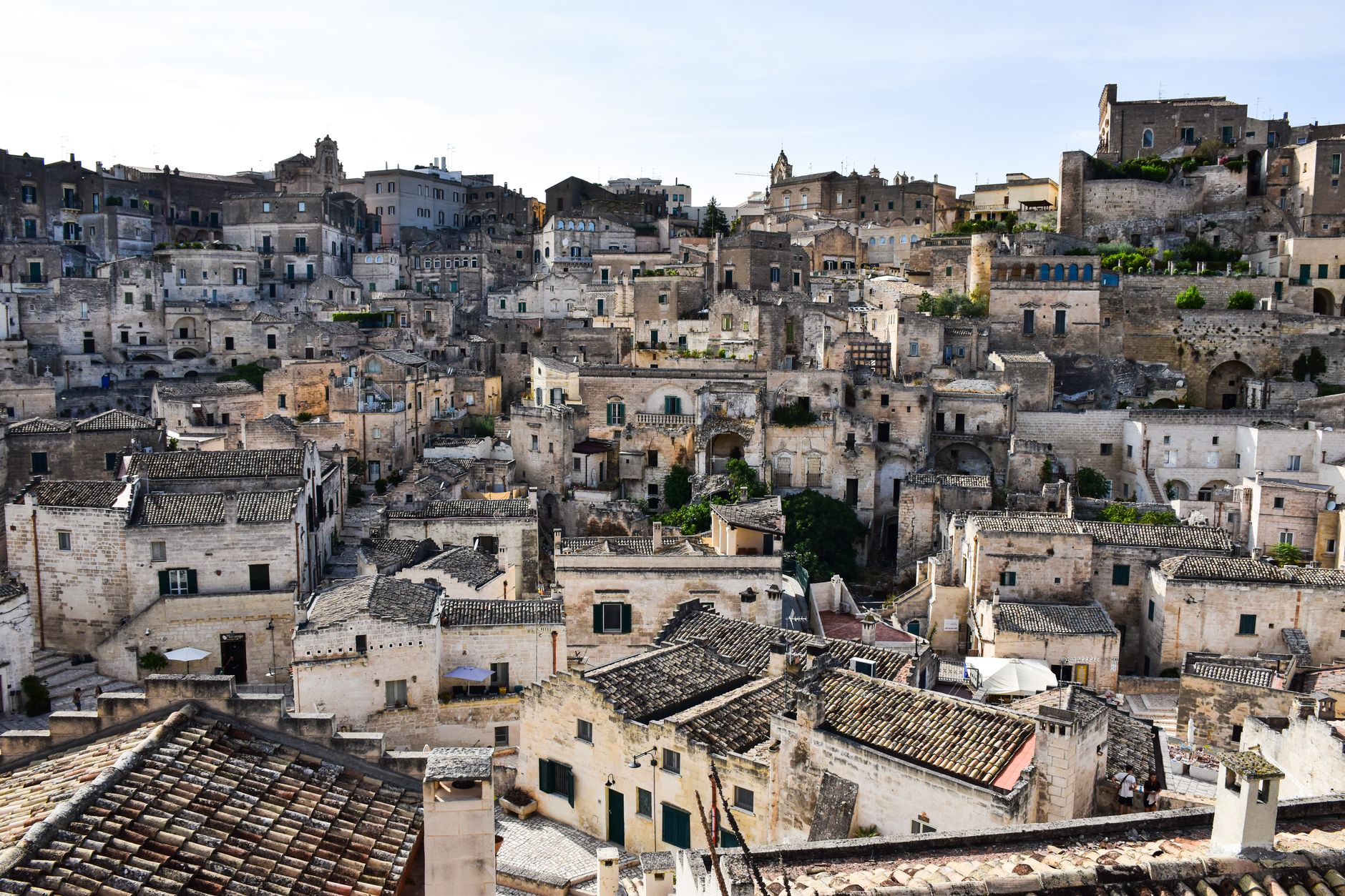
Matera is an experience that defies imagination: a vertical city where dwellings are carved directly into rock, forming a labyrinth of terraces, staircases and balconies that climb the Murgia slope. European Capital of Culture in 2019, Matera captivates with its lunar landscape and still-vibrant peasant soul, where time seems frozen among the Sassi. Here you'll discover unparalleled rupestrian heritage in Europe and an authenticity few places can offer.
The Landscape
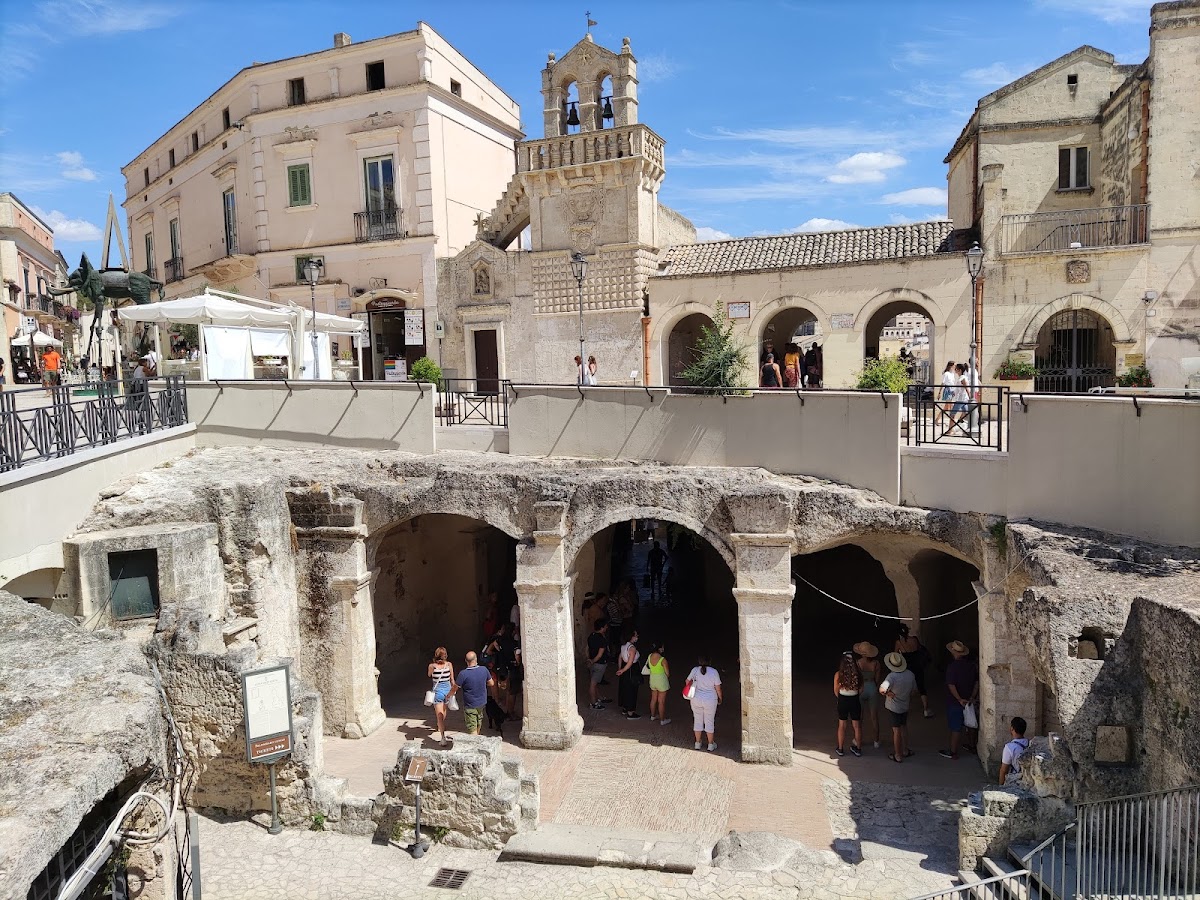
Matera sits on a limestone plateau overlooking the Gravina torrent, in the heart of eastern Basilicata. The territory is marked by dramatic geology: white and grey Cretaceous limestone walls form vertical cliffs, deep gorges and isolated pinnacles. The Sassi — the historic core — are divided into two main districts, Sasso Barisano and Sasso Caveoso, built along the ravine slopes. Around them stretches a bare, wild countryside dotted with masserie, dry-stone walls and century-old olives. The landscape is almost lunar: naked, austere, a rawness of beauty that captures the soul.
History and Folklore
The Sassi of Matera represent one of Italy's oldest human settlements: the first cave dwellings date to the Paleolithic, while the medieval borough consolidated between the 13th and 16th centuries. For centuries, these cave-homes housed families in extreme poverty; in 1952, the Italian government launched a massive resettlement and rehabilitation program. Local legend tells of Saint George battling a dragon in the ravine, protecting the borgo. Today, the "Festa della Bruna" (July 2) persists—a tumultuous celebration where an enormous paper carriage is stormed by crowds honoring Maria Santissima. The Sassi also preserve frescoed rupestrian churches, testimony to centuries-old spirituality embedded in stone.
What to Eat
Materan cuisine is peasant Lucanian cuisine: simple, genuine dishes built around the earth's bounty. Taste orecchiette with cime di rapa, a humble perfect dish, paired with Basilicata DOP olive oil. Tolfa caciocavalli, smoked in masserie, offer primitive flavor. Don't miss peperoni cruschi (smoked dried peppers), fundamental to local cooking, used to season pasta and meats. Barrese focaccia, semolina bread, friselle: each bite tells generations of peasant stories. For sweets, try fennel taralli and cartellate, confections scented with honey and almonds.
What to Drink
Basilicata produces wines of great character, often underrated. Aglianico del Vulture DOCG is undisputed king: a robust, elegant red with firm tannins and wild blackberry notes. Taste it aged, at least 5 years, when it develops extraordinary complexity. Primitivo di Manduria, softer and fruity, pairs well with local meats. Among whites, Greco di Tufo offers refined alternatives. For a local aperitif, try sweet, seductive Moscato di Trani. Small Materan producers, around Montescaglioso, offer natural and organic wines of genuine character.
When to Visit
Spring (April-May) and autumn (September-October) are ideal: mild temperatures, golden light, moderate crowds. Summer can be scorching; winters cold and windy. July features Festa della Bruna (July 2), a spectacular event where celebration becomes ancestral ritual. September brings Materadoc Film Festival, cinema in the Sassi. Easter sees religious processions color ancient alleys. Avoid August if seeking tranquility. December brings magic with festive lights and rupestrian nativity scenes.
Places Worth Visiting
**Sasso Barisano and Sasso Caveoso**: The two labyrinthine shores of the Sassi. The first is more vibrant and populated, the second wilder and solitary. Getting lost in their alleys is pure meditation. **Piazza San Pietro Caveoso**: The southernmost point, where the ravine falls sheer. A simple yet powerful church dominates the square, overlooking a 70-meter precipice. **Murgia Plateau**: Just outside Matera, this wild plateau is dotted with Byzantine rupestrian churches (Madonna de Idris, San Giorgio). Perfect for trekking, offering breathtaking panoramas.
Practical tips
Sleep in the Sassi, in one of the cave-homes converted to accommodations. Waking surrounded by millennial stone is transformative. Book well in advance.
Explore on foot and without haste. Matera doesn't rush. Descend into hidden piazzas, drink coffee in a local bar, talk with residents. The real city lives in details.
Wear comfortable non-slip shoes: steps are irregular and ravine humidity makes them slippery. A headlamp is useful for dark rupestrian churches.
Plan your trip
Personalised day-by-day itinerary in 5 minutes — restaurants, hotels, live events.
Plan now