Salento whispers history through the baroque squares of Lecce, the white houses of Ostuni, and golden beaches lapped by the Adriatic. Here red earth merges with crystalline sea, and time flows to the ancient rhythm of shepherd routes and fortified farms. Every street, port, and taverna holds secrets of an authentically wild and seductive Puglia.
The Landscape
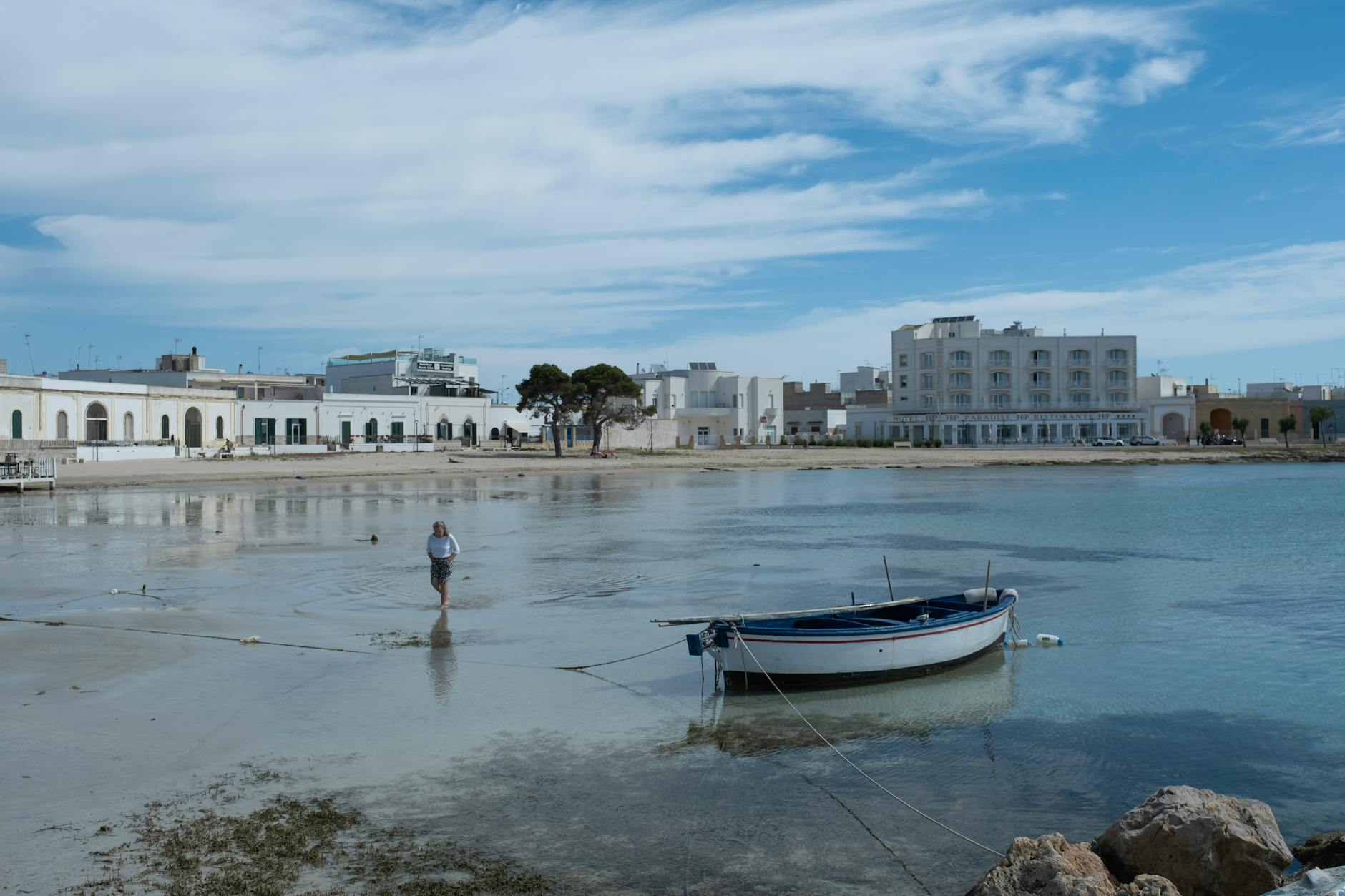
Salento is the heel of the Italian boot, a peninsula stretching between the Adriatic and Ionian seas. The landscape rolls with centuries-old olive groves punctuated by dry-stone walls carving invisible boundaries across limestone terrain. Fortified farmhouses—masserie from the 16th-18th centuries—dot the horizon, built as defense against corsairs. The coast alternates between golden sandy beaches like Torre dell'Orso and rocky coves with marine caves. The interior hides Mediterranean scrubland, while urban centers like Lecce dazzle with some of Europe's most refined baroque architecture. This is a land shaped by conquest and resilience.
History and Folklore
Salento is a palimpsest of civilizations: Messapians, Romans, Vandals, Saracens, Normans, and Aragonese all left indelible marks. In the Middle Ages it became a pilgrimage epicenter to the Basilica of Santa Maria di Leuca, where local tradition claims Saint Peter first landed in Italy. Fortified farmhouses and coastal towers (like Torre Pali) testify to constant struggle against Barbary corsairs. Lecce's baroque culture emerged from post-1695 earthquake reconstruction with exuberant style. Local legends tie the Pizzica dance to tarantula venom: tarantism mythology roots in the cult of Saint Anthony of Padua, protector from bites. These stories weave deep into regional identity.
What to Eat
Salentine cuisine is primal yet carefully crafted. Start with Burrata di Andria DOP, creamy fresh cheese that melts on the tongue. Taste orecchiette with locally-grown turnip greens, dressed with garlic, chili, and salentine extra virgin olive oil. Cartellate—fried rosette pastries—represent local sweets, while salentine pork loin shows mastery in butchering. Don't leave without trying the focaccia barese (tomato and olive) made throughout Salento. Riso tiella, an orzotto with local vegetables, is authentic comfort. Every bite carries stories of farmers and timeless traditions passed through generations.
What to Drink
Salento produces extraordinary wines under Salice Salentino DOC and Primitivo di Manduria DOC designations. Primitivo, the native grape, offers intense red fruit aromas and spicy notes, perfect with hearty dishes. Negroamaro reveals noble tannins and mineral complexity. Try Fiano di Salento for crisp, salty whites. Beyond wine, enjoy local coffee—Salentine coffee tradition is vibrant—or digestive amari like Fernet Branca. Fresh lemon water serves as nature's digestif on hot summer days, part of the daily ritual.
When to Visit
Spring (April-May) brings temperate days with almond blossoms and broom in bloom. Summer peaks with crowded beaches and August's 'Notte della Taranta' National Pizzica Competition celebrating the region's signature dance. Autumn (September-October) offers warm seas and gastronomic festivals in masserie. Winter is quiet, ideal for silence-seekers. Festivities of Saint Anthony of Padua (June) in Salve and the Madonna di Leuca feast (August) draw devoted crowds. Each season carries its own magic and rhythm.
Places Worth Visiting
Lecce is the undisputed baroque capital: the Basilica di Santa Croce with its exuberant façade is a 17th-century masterpiece, while Piazza del Duomo captivates with perfect geometric proportions. Ostuni fascinates with its blindingly white old town perched on three hills, narrow streets, and decorated churches. Finally, the Basilica di Santa Maria di Leuca, where Adriatic and Ionian seas converge, remains a pilgrimage destination and natural wonder.
Practical tips
Rent a car: Salento reveals itself best on the road, visiting rural masserie and hidden coastal villages off main routes.
Visit at sunset: the sky ignites orange and pink over beaches, creating unforgettable moments, especially at Torre dell'Orso and Melendugno.
Talk with locals: in osterie and masserie, listen to fishermen and farmers' stories—Salento's true essence lives in their words.
Plan your trip
Personalised day-by-day itinerary in 5 minutes — restaurants, hotels, live events.
Plan now