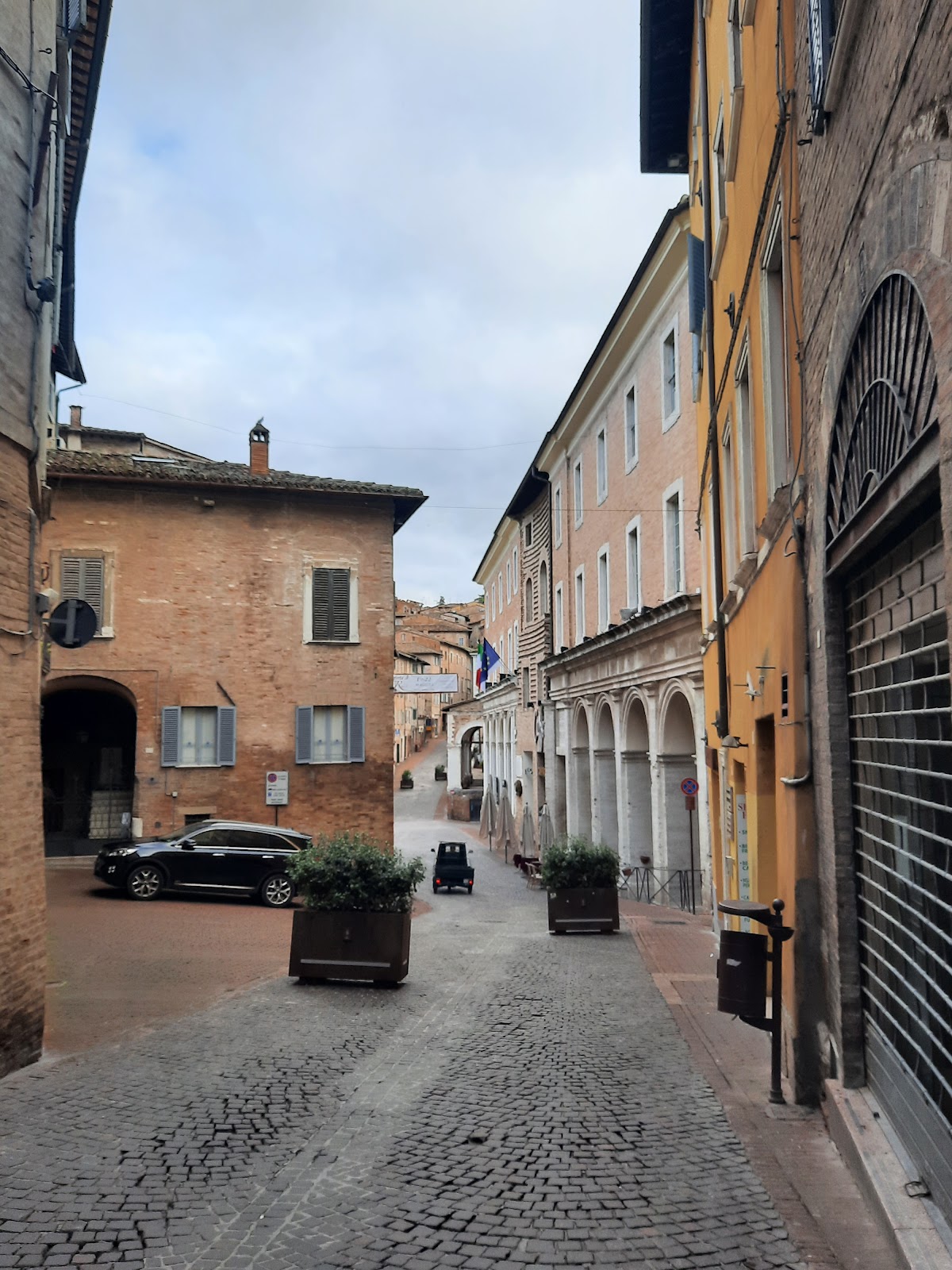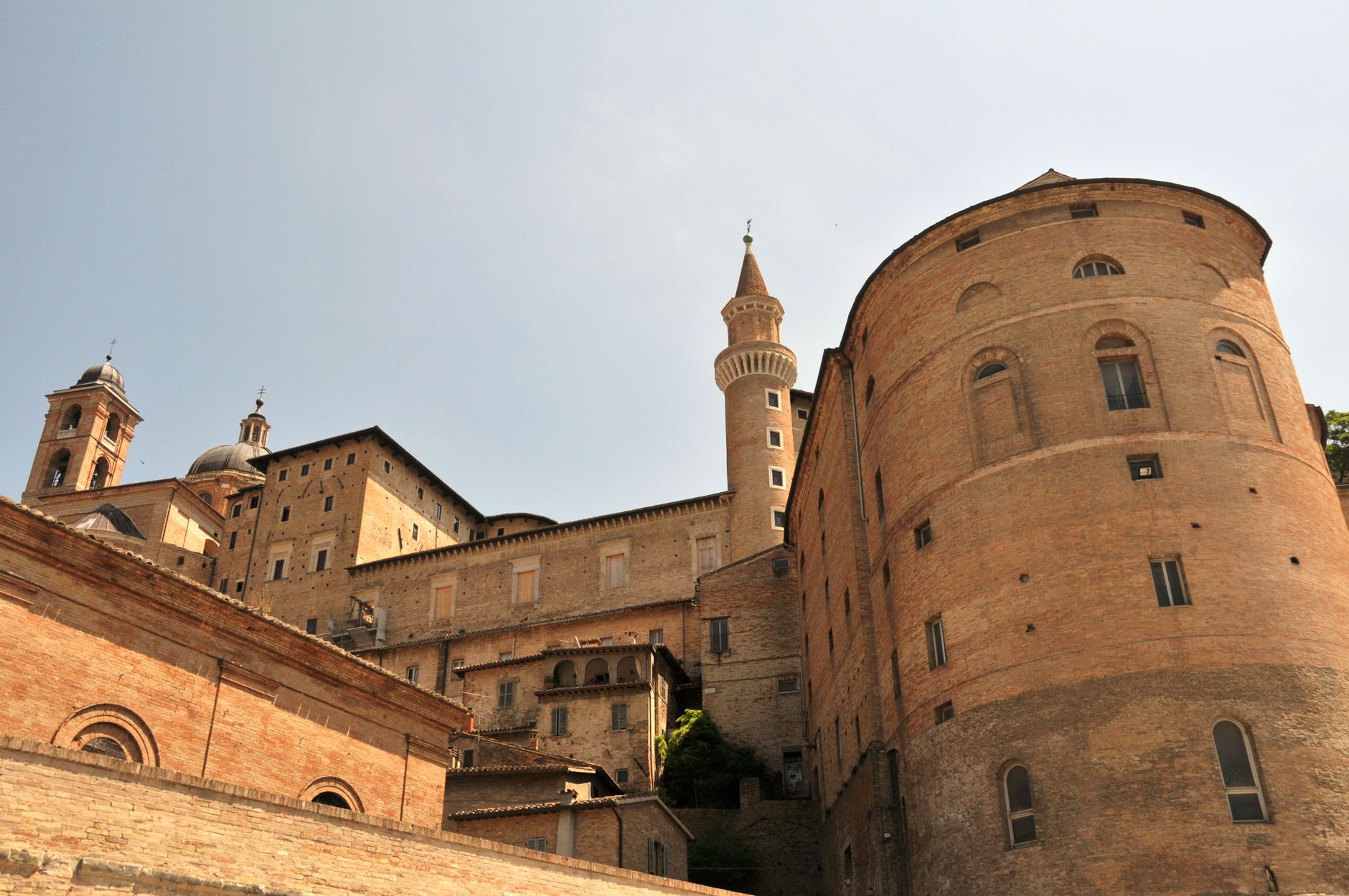
Urbino is one of Italy's most captivating cities, a cradle of Renaissance genius and home to Duke Federico da Montefeltro. Perched on a Marche hilltop, its magnificent Ducal Palace and cobbled streets offer breathtaking vistas. Minutes away, the Pesaro coast reveals tranquil beaches, medieval villages nestled among pine groves, and an enchanting blend of history, art and sea.
The Landscape
The Urbino and Pesaro region boasts remarkably varied landscapes: from beech and oak-covered mountains to rolling hills, descending to sandy beaches fringed with pine groves along the Adriatic. Urbino commands 485 metres of elevation, offering panoramic vistas stretching to the sea. The Pesaro coast spans 32 kilometres of shoreline, alternating between open beaches and equipped seaside resorts. Rivers such as the Foglia and Metauro have carved fertile valleys perfect for agriculture and viticulture, shaping this diverse territory.
History and Folklore
Urbino reached its golden age in the 15th century under Federico da Montefeltro, whose Ducal Palace became a Renaissance architectural masterpiece. The city fostered artistic genius: Raphael was born here in 1483, and Piero della Francesca worked within its walls. Local legend tells of the Duke receiving Lucrezia Borgia during her political machinations. Marche folklore runs deep with nature's rhythms; Pesaro's soldiers once carried Venice's lion insignia during the Venetian Republic. Inhabitants maintain ancient customs, from Easter processions to traditional confraternity chants.
What to Eat
Culinary traditions here are rooted in simplicity and ingredient excellence. Mortadella di Urbino DOP is prized for its delicate balance, enriched with noble spices. Fresh egg Tagliatelle dressed with local walnuts—Pesaro's signature dish—arrives with a whisper of cream. Prosciutto di Carpegna DOP ages in natural caves in nearby hills. Don't miss Cascioli, pastry parcels filled with fresh cheese and walnuts, or Crescia, Pesaro's savoury flatbread. Each taste echoes centuries of Marche tradition.
What to Drink
Bianchello del Metauro DOC is the region's celebrated white wine—fresh and mineral, perfect with coastal seafood. Sangiovese dei Colli Pesaresi DOC delivers elegant red with silky tannins, ideal for local meats. Verdicchio thrives here, gaining remarkable finesse from calcareous soils. For sparkling wine lovers, Colli Pesaresi Spumante brut is superb. Visit family-run wineries where local vignerons share their creations with genuine passion.
When to Visit
Spring (April–May) is ideal: cherry blossoms bloom around Urbino and temperatures are mild. Summer draws crowds to Pesaro's beaches; September offers warm weather with fewer tourists. Don't miss the International Ballet Festival (August) in Pesaro or the Toletta Festival (July), a medieval celebration with costumes and music. Autumn brings San Costanzo Fair (May) attracting merchants from across Italy. Winter is peaceful, perfect for exploring Urbino without crowds.
Places Worth Visiting
**Palazzo Ducale, Urbino**: Renaissance masterpiece where Federico da Montefeltro gathered art and knowledge. Now home to the Galleria Nazionale delle Marche displaying works by Raphael, Piero della Francesca and Titian. **Pesaro and its Seafront**: golden beaches, Palazzo Mosca with art collections, and medieval Gradara's perched fortress. **Mondavio**: this perfectly preserved fortified village with its intact rocca offers authentic windows into Marche medieval life—ideal for unforgettable sunset photography.
Practical tips
Book Palazzo Ducale visits in advance, especially in summer. Admission includes access to the Galleria Nazionale, one of Italy's finest art collections.
Rent a bicycle to explore the Pesaro coast: cycle paths connect Pesaro to Fano through stunning landscapes and hidden villages.
Visit local markets early morning (Monday–Saturday) to find Mortadella di Urbino DOP producers and fresh cheeses directly from Marche dairies.
Plan your trip
Personalised day-by-day itinerary in 5 minutes — restaurants, hotels, live events.
Plan now