Bergamo captivates the soul: its Città Alta, encircled by sixteenth-century walls, emerges from the Padana mist like a gem suspended in time. Here, among cobbled alleys and frescoed squares, every corner breathes Venetian and Lombard history. Descending to the Città Bassa, you discover a contemporary Bergamo, vibrant with cafés, art galleries, and an energy that never tires.

The Landscape
Bergamo sits on the border between the Padana Plain and the Orobian Prealps, a position that has always defined its historic role as a sentinel between two worlds. The surrounding hills gently descend northward, where the Orobie peaks create a breathtaking panorama. The Brembo river cuts through the valley, sustaining human activity for centuries. In spring, the Bergamo meadows explode with color; in autumn, historic chestnut groves offer palettes of gold and crimson. A continental climate tempered by alpine breezes makes the territory ideal for viticulture and the cultivation of prized vegetables.

History and Folklore
Bergamo has Roman roots (Bergomum), but its true identity emerged under the Venetian Republic, which dominated for nearly four centuries. The sixteenth-century walls, built between 1561 and 1588, are the symbolic masterpiece of this era. In Bergamo folklore lives the legend of Arlecchino, born in the nearby village of Oneta in the sixteenth century, a figure who transformed European commedia dell'arte. Every square tells stories of noble families, Renaissance artists like Carpaccio, and unchanged artisan traditions. The Palio di Bergamo, religious processions, and bergamasque folk songs perpetuate these bonds with the past.

What to Eat
The Bergamo table celebrates robust ingredients and authentic flavors. Casoncelli di Bergamo DOP—pasta filled with meat, golden raisins, and amaretti—embodies the territory's soul, traditionally dressed with melted butter and sage. Polenta Taragna, made with buckwheat and cheese, warms winter evenings in every trattoria. Formaggio di Bagoss DOP, aged in dairies of Bagolino, fascinates with its complexity. Don't miss bergamasque watermelon caviar and Pane di Grumello, a medieval heritage bread. Every bite tells stories of culinary wisdom.

What to Drink
Bergamo's province produces characterful wines in the Colline del Bergamasco DOC. Scanzo, an aromatic and elegant red passito, is Bergamo's jewel, recognized as DOCG, perfect after dinner with amaretti. The white wines of the area—Moscato di Scanzo and Verdiso—pleasantly accompany traditional dishes. Franciacorta DOCG, though from nearby zones, is readily available. Don't miss local distillates: Grappa del Bergamasco and aged aquavits from small artisan producers.
When to Visit
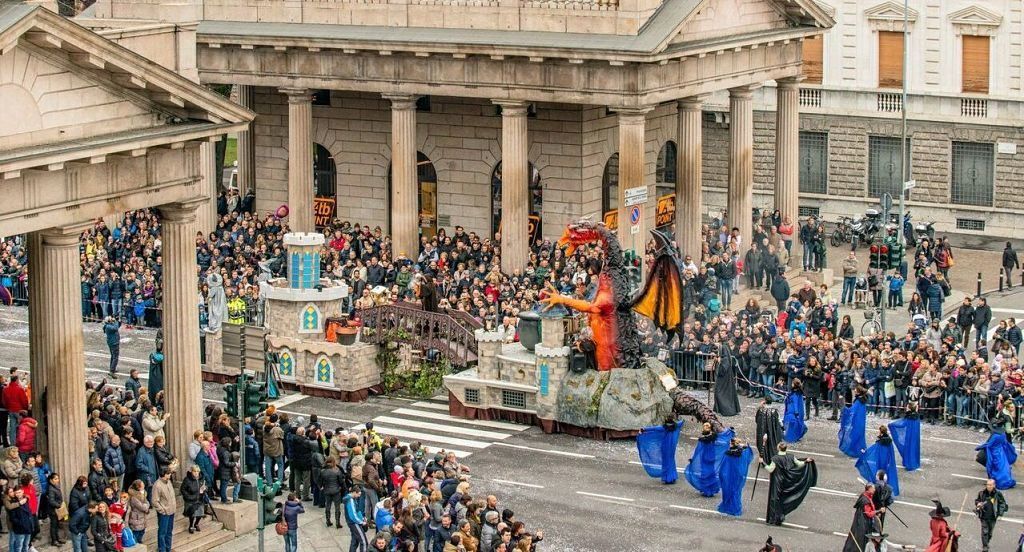
April and May offer the best blend of mild weather and extraordinary blooms. In June, Bergamo Musica Festival transforms the Città Alta into an open-air concert hall. September brings early autumn with spectacular foliage on the hills. The Palio di Bergamo (August) enlivens medieval contrade with historic costumes and competitions. December brings Christmas markets and festivities lighting squares and narrow lanes. Winter, though gray, reveals contemplative charm, perfect for exploring museums and trattorias.

Places Worth Visiting
Piazza Vecchia, heart of the Città Alta, enchants with the Contarini Fountain and the Venetian Palazzo della Ragione. The Basilica of Santa Maria Maggiore, a Renaissance masterpiece, astounds with marble intarsia and the Cappella Colleoni, a jewel of Bartolomé Colleoni. The Accademia Carrara houses masterpieces by Botticelli, Raphael, and Mantegna, while the Galleria dell'Accademia Carrara showcases contemporary collections in the elegant Palazzo Tasso.
Practical tips
Purchase the Bergamo Card for unlimited museum access and public transport. Worth every euro.
Visit producers' cellars in Trescore Balneario for authentic Casoncelli tastings and local wine experiences.
The funicular connects the Città Bassa to Città Alta in minutes. Ride at sunset for unforgettable views.
Plan your trip
Personalised day-by-day itinerary in 5 minutes — restaurants, hotels, live events.
Plan now