The Dolomites (UNESCO Heritage 2009) are nine mountain systems in north-eastern Italy — between Trentino-Alto Adige, Veneto and Friuli — with peaks reaching 3,342m (Marmolada). Their unique characteristic is the limestone rock that at sunset turns pink, orange and then purple — the enrosadira, the optical phenomenon that the Ladins call 'flame' and that no other place in the world replicates with this intensity. The area is divided into four main zones: Alta Badia/Val Gardena (Bolzano, the most serviced), Cortina d'Ampezzo (the most exclusive), Pale di San Martino/Val di Fassa (Trento, the most accessible), and the Cadore/Belluno area (the wildest). A car is necessary to move between the valleys — in summer intercity buses connect the main centres but with limited schedules. The Dolomiti Superski (ski) and the summer hiking trail network (over 2,000 km marked) share the same cable cars.
Lake Braies and Alta Pusteria
Lake Braies (1,496m, Trentino-Alto Adige) is the Dolomites' most photographed lake — the emerald-green water reflects the Crode del Becco on three sides while the fourth opens onto a fir forest. The lake circuit on foot (3.5km, 1h, easy) is accessible to all. In July-August the car park is paid and limited (mandatory online booking) — arrive before 8:00 or after 17:00 to avoid queues. From Braies opens the Alta Pusteria (the valley of Dobbiaco, San Candido, Sesto) — the most German territory of the Dolomites, with Tyrolean cuisine (speck, canederli, strudel), mountain farms and the Drei Zinnen (Tre Cime di Lavaredo). The Tre Cime (2,999m) are reachable on foot in 2h from Rifugio Auronzo (paid, €30 for the car) — the complete circuit of the three peaks is one of Europe's most famous treks (10km, 600m elevation, 4h).
Val Gardena and Alta Badia
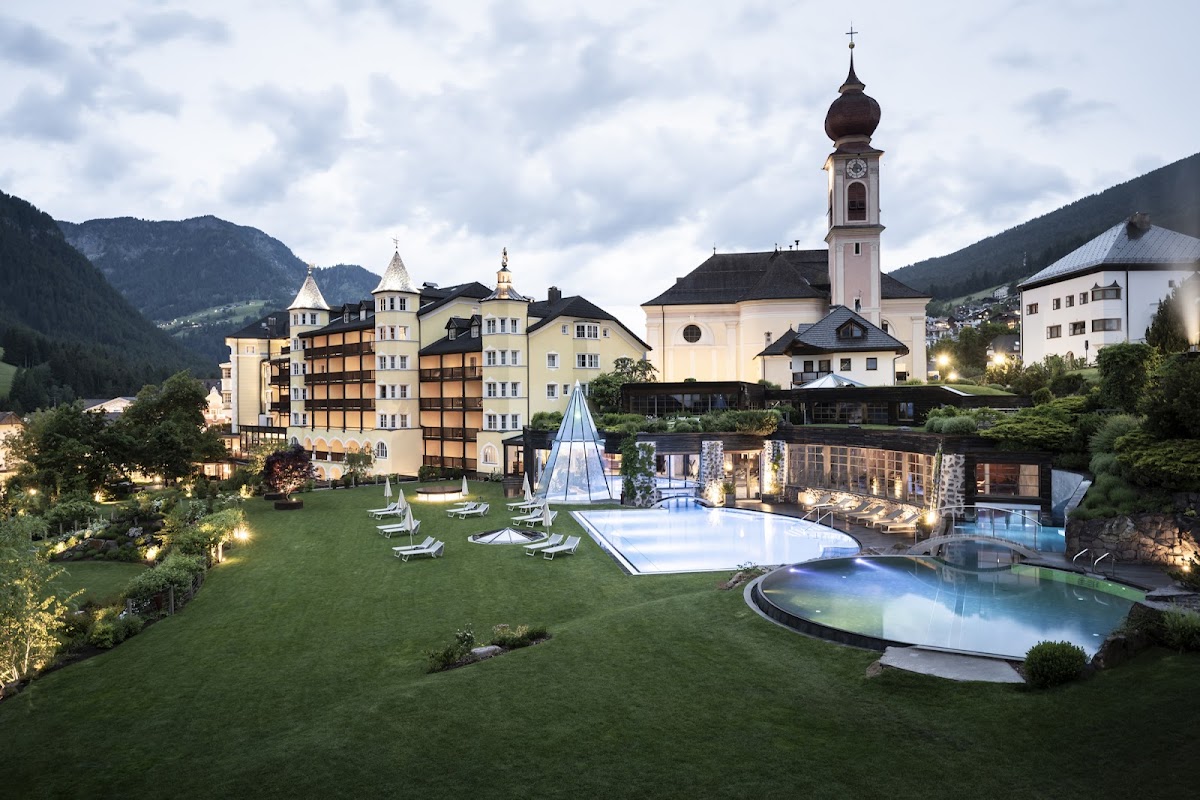
Val Gardena (Ortisei, Santa Cristina, Selva) is the Dolomites' most frequented valley — summer cable cars for hikers, trails for all levels, mountain huts every 2-3 hours. The Sassolungo (3,181m) and Sassopiatto dominate the head of the valley — the Sassolungo chairlift (€25 return) reaches 2,680m in 20 minutes. Alta Badia (Corvara, La Villa, San Cassiano) is the Ladin territory — the linguistic minority with their own language (Ladin, a Romance language of the Rhaeto-Romanic group) that has inhabited the Dolomite valleys for 2,000 years. Alta Badia mountain huts serve the Dolomites' most refined Ladin-Tyrolean cuisine: Rifugio Pralongia and Pra di Tori serve boards of speck, casera and sciòs (local cheeses). The Sellaronda (the circuit of four passes — Sella, Pordoi, Campolongo, Gardena) by mountain bike (summer) or ski (winter) is one of the Alps' most famous circular routes.
Cortina d'Ampezzo and the Pale di San Martino
Cortina d'Ampezzo (Belluno) is the most exclusive Dolomite resort — elegant, expensive, with Corso Italia as the shopping promenade. The Tofana cable car (€35 return) reaches 3,244m in two stages — one of the Dolomites' most vertiginous ascents. Rifugio Lagazuoi (reachable by cable car, €25 return) is base for trekking on the Piccolo Lagazuoi, scene of fierce Great War fighting — the trenches and tunnels dug into the rock are still visitable. The Pale di San Martino (Trentino) are the wildest Dolomite plateau — accessible from San Martino di Castrozza (Rosetta cable car, €25 return, plateau at 2,600m) or from Fiera di Primiero. The Bessanese Cave and Rifugio Rosetta are the most frequented points. Val di Fassa (Canazei, Vigo di Fassa) is the most economically accessible base for the Alta Via delle Dolomiti n.2.
Dolomite Cuisine and Gastronomy
Dolomite cuisine is Tyrolean-Ladin — far from central-south Italian cooking. The fundamental dishes: canederli (dumplings of stale bread, speck, chives, served in broth or with melted butter — the most widespread mountain hut dish), Alto Adige IGP speck (smoked cured ham with spices, aged 22 weeks, produced between 300 and 900m altitude), schlutzkrapfen (pasta filled with spinach and ricotta, typical of Alta Val Pusteria), apple strudel (with hand-rolled pastry, raisins, pine nuts and cinnamon). Mountain huts (structures between 1,800 and 3,000m) serve full meals — one of the Dolomites' best value for money options. Book the mountain hut for the evening: sleeping at altitude with the Dolomite dawn is an experience worth the price (€40-70 per night with half board).
Practical tips
Lake Braies in July-August requires online car park booking — or arrive before 8:00
The enrosadira (Dolomite red at sunset) is best seen from a mountain hut at altitude — book one night
Canederli in broth at the mountain hut is the Dolomites' most authentic meal — prefer them over tourist burgers
Tre Cime di Lavaredo: arrive at Rifugio Auronzo before 8:00 — after 10:00 the car park is full
The Sellaronda by mountain bike (summer) is one of the Alps' finest circular routes — hire available in all centres
Plan your Dolomites trip
Lake Braies, Tre Cime and Alta Badia — tailored itinerary in 5 minutes.
Plan now