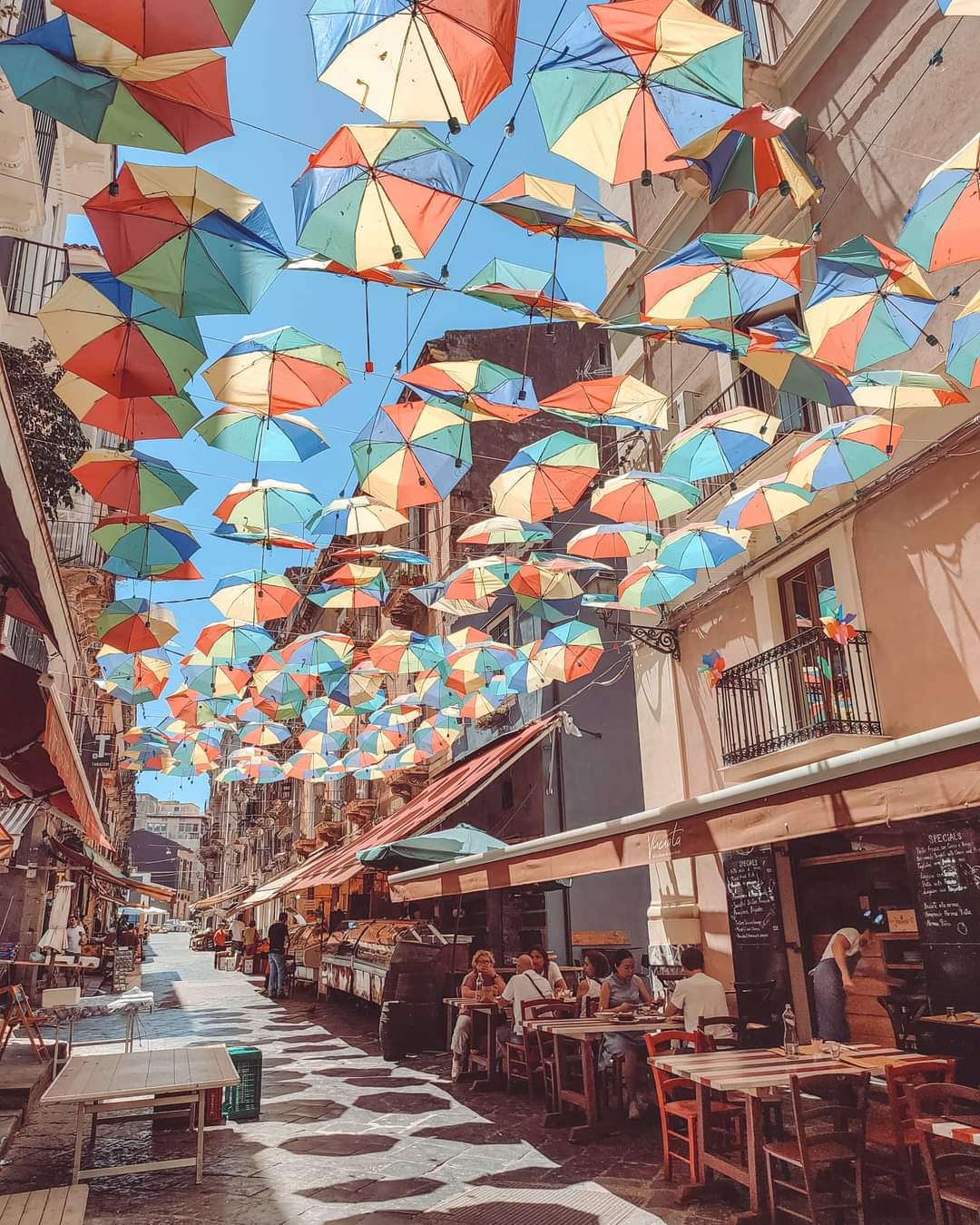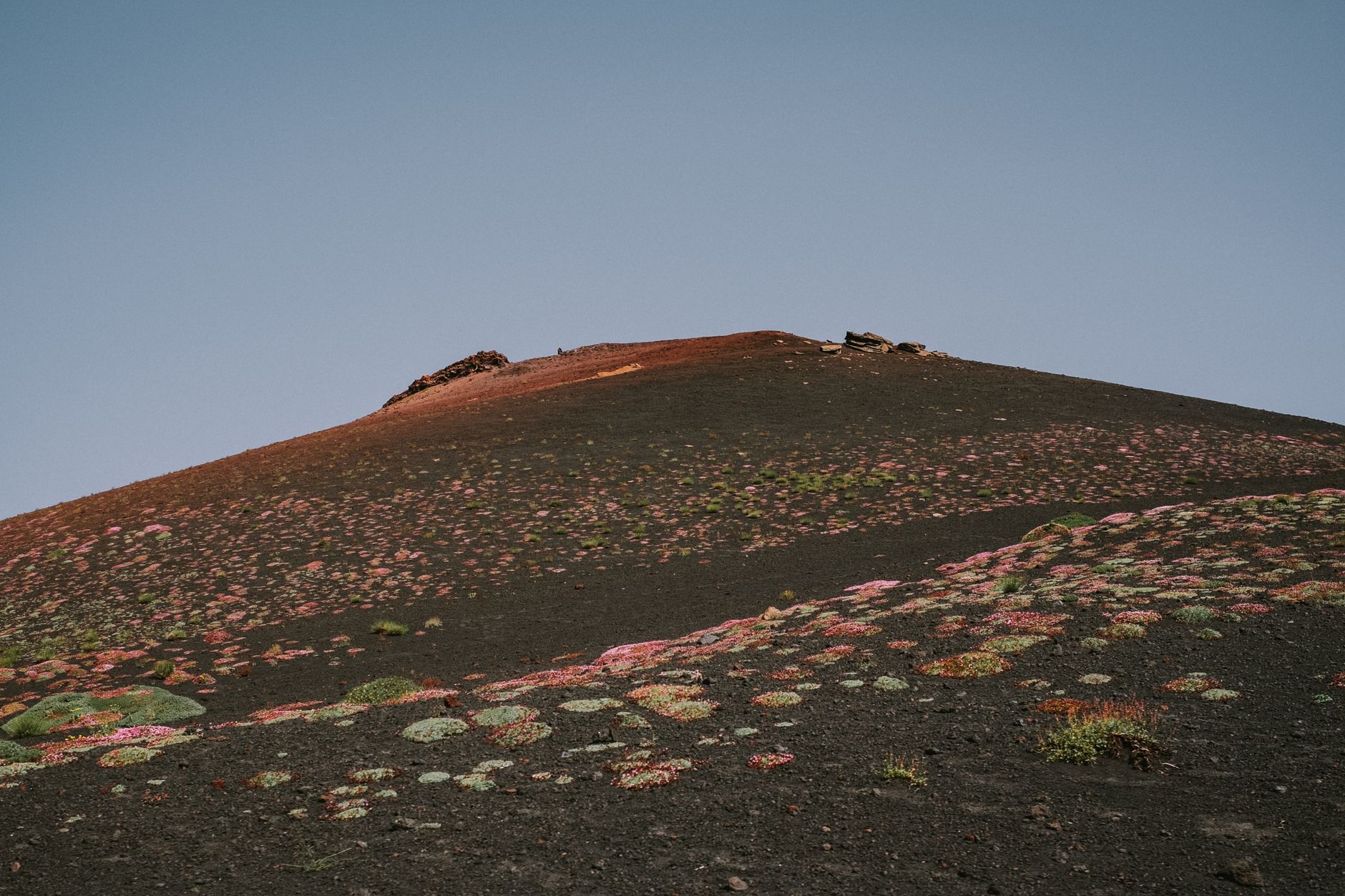
Mount Etna looms over the landscape like a silent giant, Europe's most active volcano, while Catania at its feet pulses with baroque life, golden palaces and squares animated by centuries of history. In this region where the fire of the earth merges with the fire of culinary tradition, each step tells ancient legends and every table smells of lemons and pistachio. It is here that Sicily reveals its true essence: wild, sensual, irresistible.
The Landscape
Mount Etna, at 3,357 meters, dominates Sicily's eastern coast creating a landscape of extraordinary beauty. Its slopes are covered with rich vegetation: oak and chestnut woods in higher zones, olive groves and terraced vineyards on the hills. Catania rises on the Ionian coast just 30 kilometers from the shore, encircled by this volcanic colossus that shaped its entire history. The black lava flows of the past, now solidified, form a fertile terroir that produces Sicily's most succulent fruits. The areas around Etna villages like Randazzo, Linguaglossa and Bronte offer unexpected alpine scenery at this southern latitude.
History and Folklore
Catania was completely rebuilt after the devastating 1693 earthquake that razed the baroque city we see today. Local legend tells of Saint Agatha, Catania's patron, who miraculously intervened during an Etna eruption in 252 AD, stopping the lava flow. The volcano itself is rich in mythology: ancient Greeks believed Hephaestus, god of fire, forged his tools in Etna's bowels. The Cyclops, legend says, inhabited its caves. Communities like Bronte thrived on its slopes, taking its name from the Greek "bronte" (thunder), as it was believed the volcano thundered before erupting. Eruptions have shaped not only the landscape but also the soul of its inhabitants.
What to Eat
Etna's cuisine blends volcanic richness with Sicilian tradition. Pistacchio di Bronte DOP is world-famous for its unmistakable flavor and emerald-green color; find it in pastas, gelatos, and authentic pestos. Arancia Rossa di Sicilia DOP from Catania illuminates dishes with its ruby-red pulp. Don't miss Ricotta Salata di Ragusa DOP, perfect grated over pasta, and Ragusano DOP cheese. Nero di seppia mingles cuttlefish ink with fresh pasta, while arancini with ragù and peas remain an absolute Sicilian icon. Fried cauliflower and swordfish rolls complete an extraordinary culinary repertoire.
What to Drink
Etna wines enjoy well-deserved international fame. Nerello Mascalese, the native grape, produces mineral and fascinating reds in Etna DOC designations: try Etna Rosso, rich and complex. Carricante is the local white grape offering fragrant and savory wines. Historic wineries like Benanti and Planeta produce world-recognized excellence. Moscato d'Aci Reale is a local dessert wine appreciated after meals. For digestif lovers, Sicilian Amaro with almond and lemon from Catania elegantly concludes dinner.
When to Visit
Spring (April-May) is ideal for Etna hikes when snow still decorates the peaks. Saint Agatha's feast in February is an extraordinary spectacle with solemn processions and illuminations. Summer offers the best volcanic views but heat is intense. Autumn (September-October) is perfect: mild temperatures, harvest season, and the Pistachio Festival in Bronte celebrates the precious fruit. Winter is magical for snow lovers: Etna is skiable in cold months. Avoid July-August for mass tourism.
Places Worth Visiting
Catania, baroque heart of Sicily: Piazza del Duomo with the black basalt elephant, symbol of the city, and the cathedral with Saint Agatha's remains dominate this urban masterpiece. Mount Etna itself, where guided tours reach the Cratere Sommitale and Montagna Grande, revealing lunar landscapes and fumaroles. The village of Taormina, nearby, offers the legendary Greek Theatre with views of Etna. Bronte is the heart of Pistacchio DOP, a small gem perched on volcanic slopes where artisan traditions remain intact.
Practical tips
Book a guided tour on Etna with authorized guides: volcanic terrain is fascinating but unpredictable. Best departures are from Rifugio Sapienza on the south side.
Visit Catania at sunset: Piazza del Duomo illuminates magically and the Elephant monument becomes even more fascinating. Surrounding restaurants are perfect for dinner with a view.
Buy Pistacchio di Bronte DOP directly from local producers at markets: guarantees authenticity and supports local economy. Avoid industrial versions at supermarkets.
Plan your trip
Personalised day-by-day itinerary in 5 minutes — restaurants, hotels, live events.
Plan now