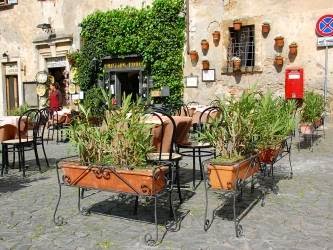
Orvieto rises from the Tuscan landscape like an apparition: its shimmering mosaic cathedral dominates Umbria from a suspended tufa cliff. Here, the Middle Ages have not passed, but live in winding streets, in abyssal wells carved into stone, and in glasses of Orvieto Classico that cardinals drank in the 14th century. A city where sacred art and wine pleasure intertwine in perfect harmony.
The Landscape
Orvieto stands on a volcanic tufa cliff 315 meters high, isolated in the Paglia Valley between Tuscany and Umbria. The surrounding landscape unfolds in rolling hills, ordered vineyards, and clay canyons creating extraordinary chromatic contrasts. The blonde tufa, extracted for centuries from the rock's depths, has shaped both the city's architecture and its subterranean network—a true underground city of over 800 interconnected cavities. The zone benefits from a temperate microclimate ideal for Grechetto and Trebbiano vines, which give the wines their characteristic minerality reflecting the volcanic terroir.
History and Folklore
Orvieto's roots run deep into Etruscan Urbs Vetus, but its medieval splendor began in the 12th century when it became a papal refuge during Guelph-Ghibelline conflicts. Legend tells that in 1263, in nearby Bolsena, a doubtful priest witnessed the Chalice of Miracles bleed real blood, an event that led to the Cathedral's construction beginning in 1290. Popular tradition speaks of the Well of St. Patrick, commissioned by Pope Clement VII during the 1527 siege to ensure drinking water: a spiral of 248 steps that locals still describe with reverent fear. Orvieto was the Curia's refuge during plagues, and its tunnels housed secret arsenals and granaries.
What to Eat
Orvietani cuisine celebrates the tufa itself: IGP Tropea onions appear in dishes rich with peasant memory, while fresh egg pasta—still hand-rolled—meets black truffles from Terni and porcini mushrooms. Leave the city without tasting Umbricelli, typically Umbrian pasta served with wild boar ragù. DOP Pecorino Romano from nearby hills completes every tasting. Tradition demands accompaniment with DOP bread from Altamura, hearty and fragrant as only Orvietan ovens know. Walnuts from Soriano nel Cimino add crunch to local sweets, while acacia honey matures slowly in beehives of surrounding countryside.
What to Drink
Orvieto Classico DOCG reigns supreme: an extraordinarily elegant mineral white produced from Grechetto and Trebbiano grapes on volcanic soils around the city. Wine earned papal prestige as early as the 14th century. Also taste Orvieto Classico Superiore, steel-aged with notes of citrus and sage. For reds, Rosso Orvietano DOC offers generosity from Sangiovese and Cabernet. Vernaccia di Cannaiola, a minority local wine, represents the zone's experimental soul. Traditional tufa-carved cellars maintain constant temperatures—visit them to understand how geology shaped local winemaking. Ideal conclusion with a Vin Santo degli Etruscorum.
When to Visit
Spring (April-May) offers the Palio dei Quartieri, a medieval celebration where neighborhoods compete in spectacular equestrian pageantry. Summer is dominated by the Festa della Palombella (May), where a mechanical dove glides over the cathedral during solemn Mass. Autumn brings the Orvieto Jazz Festival (November) and harvests, when vineyards transform into gold. Winter offers tranquility and tunnel exploration without crowds. Avoid August if you prefer authenticity over European tourist flows.
Places Worth Visiting
The Cathedral of Santa Maria dell'Assunta, a Gothic-Renaissance masterpiece begun in 1290, fascinates with the Chapel of the Corporale—guardian of the Eucharistic miracle—and Luca Signorelli's frescoes of the last days. The Well of St. Patrick, a vertiginous spiral into tufa carved in 1527, offers an almost initiatory descent into the city's womb. Finally, the medieval village of Civita di Bagnoregio, reached by a suspended footbridge, seems to float in time just kilometers from Orvieto, completely isolated by the eroded banks of the Badlands.
Practical tips
Visit the Cathedral at first light to watch how light transforms the colors of the mosaics: a spectacle few tourists witness.
Descend into the Underground City: Etruscan and medieval tunnels will reveal secrets that surface Orvieto conceals. Book a certified guide.
Buy wine directly from small family wineries in the alleys: Classico costs half the tourist shop price and owners share family stories.
Plan your trip
Personalised day-by-day itinerary in 5 minutes — restaurants, hotels, live events.
Plan now