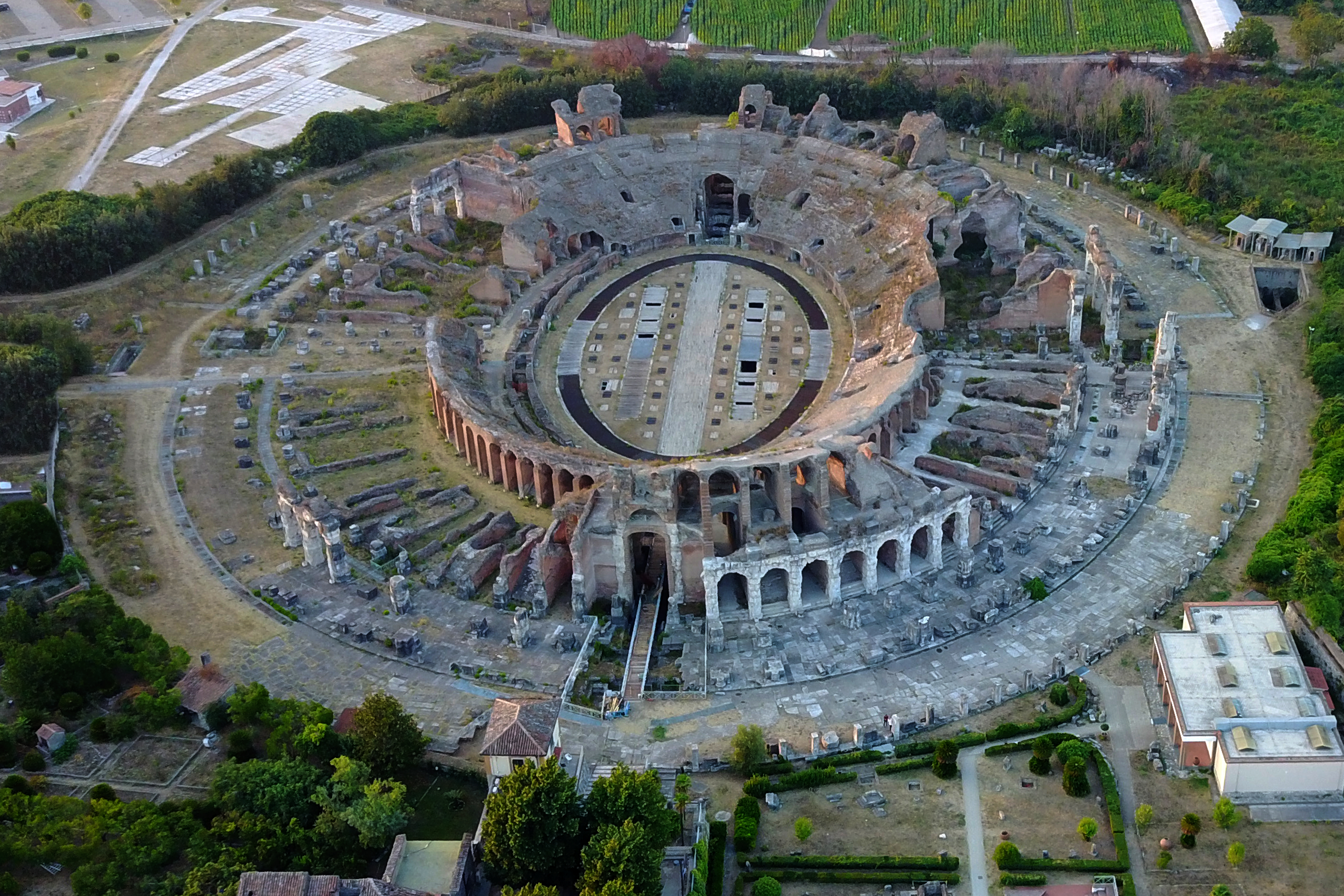
Caserta e Terra di Lavoro is the beating heart of inner Campania, where the majesty of the Bourbon Palace rises against the volcanic landscapes of the Tifatini Mountains and valleys planted with century-old vines. Here, far from crowded coasts, you'll discover intact culinary traditions, characterful wines, and medieval villages that seem frozen in time. This land, which ancient Romans called the granary of Italy, continues to offer gastronomic and spiritual surprises to those who know where to look.
The Landscape
Caserta e Terra di Lavoro stretches between the Volturno and Garigliano rivers, a territory embodying Campania's environmental diversity. The Tifatini Mountains dominate to the north, dotted with oak and chestnut forests, while south open fertile plains where traditional agriculture still thrives. The landscape constantly shifts: from vineyard plateaus to beech forests, from small karstic lakes to river valleys carved into volcanic tuff. Elevation ranges from 20 metres on the Volturno plain to 812 metres at Rocca Monfina. This geography has always shaped human settlement and cultivation: cereals, chestnuts, wine and hazelnuts remain economic pillars.
History and Folklore
Terra di Lavoro takes its name from the fertile lands of the Volturno, where crops flourished in Roman times. In the Middle Ages, the area became a Norman fief, then passed to the Angevins and finally to the Bourbons, who made it the base of their southern power. Local legend speaks of the Dragon of Rocca Mondragone, a mythological creature protecting harvests, and woodland fairies dancing on full moon nights in the Tifatini. Popular folklore preserves the figure of the 'munaciello', a mischievous sprite of old alleys and ancient homes, still recounted in night vigils. The Palace of Caserta represents the pinnacle of this Bourbon heritage: commissioned by Charles of Bourbon in 1752, it embodies ambition to rival Versailles.
What to Eat
The cuisine of Terra di Lavoro celebrates agricultural rhythms and peasant simplicity elevated to art. Buffalo Mozzarella DOP from the Volturno pastures is undisputed queen: creamy, delicate, perfect with local tomatoes. Taste Giffoni Hazelnuts DOP, lightly roasted and salted, stars of sweets and creams. Gragnano Pasta IGP, still bronze-drawn, accompanies ragù made with puccia (each family's secret recipe). Cruschi Peppers IGP, smoked and dried, lend character to dishes. Don't miss cuoppa (pork salumi) from Piedimonte Matese and Volturno Pasture Provolone DOP, marked by traditional smoking.
What to Drink
Wines of Terra di Lavoro emerge from volcanic terroir offering mineral freshness. Aglianico del Taburno DOCG, full-bodied and oak-aged, represents the zone's oenological monument: elegant tannins, notes of black cherry and spice. Greco di Tufo DOCG, elegant Campanian white, develops floral and fruity aromas. Don't miss Fiano di Avellino DOCG, with almond and honey notes, perfect with local cheeses. For lighter pause, Falanghina del Sannio DOC offers salinity and vivacity. Small producers in Maddaloni and Sant'Agata de' Goti guard ancestral recipes of natural sparkling wine.
When to Visit
Spring (April–May) is ideal: fruit orchards flower, temperatures are mild, and the Feast of San Giorgio in San Giorgio a Cremano animates villages. Summer (June–August) brings perfect sunshine but crowds the Palace heritage. Autumn (September–October) is magical: harvests in vineyards, the Chestnut Festival in Capodimonte draws crowds, and crisp air refreshes walks. The Feast of San Martin in November celebrates new wine arrival. Winter stays mild: December welcomes Christmas markets in Caserta featuring local crafts.
Places Worth Visiting
Royal Palace of Caserta: Luigi Vanvitelli's masterpiece with 1,200 rooms, artificial waterfalls and geometric gardens stretching 3 km. UNESCO Heritage, Versailles rival. Sant'Agata de' Goti: medieval village perched on narrow tufa rock, with charming uphill alleys and central piazza dominated by collegiate church. Capodimonte and Tifatini Mountains: natural area ideal for hikes through chestnut forests with views over Campanian plains, home to Aglianico wine and intact peasant traditions.
Practical tips
Book the Palace of Caserta online at least two days ahead: it's Campania's most-visited monument and tickets sell out fast. Dedicate a half-day to the Italian gardens, often overlooked by rushed visitors.
Visit small dairies of Battipaglia and Paestum where buffalo mozzarella is still handmade. Artisans allow observation from early morning. Buy the still-warm milk for an unforgettable experience.
Travel between villages using secondary roads: SR7 hugs beautiful valleys and passes Sant'Agata de' Goti, Airola and Montesarchio. Eat in family-run restaurants, not tourist traps near the Palace.
Plan your trip
Personalised day-by-day itinerary in 5 minutes — restaurants, hotels, live events.
Plan now