The Lazio coast south of Rome was the most extensive malarial swamp in central Italy for two millennia until Mussolini's massive 1928-1939 drainage project — the Bonifica delle Paludi Pontine — converted 60,000 hectares of marshland into farmland and founded the new cities of Latina, Sabaudia, and Aprilia. The drainage also exposed previously inaccessible coastline, and today the 80 km of beaches from Anzio to Gaeta are where Romans drive on summer weekends: whitewashed Sperlonga (Italy's only Greek-island-style village outside the islands), the limestone promontory of Monte Circeo (a national park with the cleanest swimming water in Lazio), Sabaudia's 20 km of unbroken pine-backed beach, and the medieval seaside town of Gaeta. Less spectacular than Amalfi or the Cinque Terre — but a fraction of the prices, half the crowds, and authentically Roman in feel rather than international.
Getting to the Lazio coast
By car: SS148 Pontina from Rome (90-120 minutes depending on traffic — heavy on Friday afternoons and Sunday evenings), or the more scenic Via Appia for Terracina. By train: Rome Termini to Latina Scalo (40 minutes) or Fondi-Sperlonga station (1h20), then bus or taxi to the coast. Sperlonga is 8 km from Fondi station; Sabaudia is 18 km from Latina Scalo with infrequent bus service. Best strategy: car for any weekend visit. The coast is fundamentally designed around driving — beach establishments have large car parks, towns are linear strips along the coast, and the only realistic way to combine Sperlonga + Circeo + Sabaudia in one trip is with your own vehicle. Renting at Rome Termini for 2-3 days: €60-100.
Sperlonga and the Grotto of Tiberius
Sperlonga is the most spectacular village on the Lazio coast — a whitewashed maze of stepped alleys, vaulted passages and tiny piazzas climbing a rocky promontory between two crescent beaches. The town is on the Borghi più Belli d'Italia list and looks more like a Cycladic island than mainland Italy. The historic centre is car-free (parking outside, €1-3/hour). Below the town, the National Archaeological Museum and the Villa of Tiberius (€6 combined) contain the spectacular sculptural group from the emperor's seaside cave — four massive marble groups depicting episodes from the Odyssey (the blinding of Polyphemus, Scylla attacking Ulysses's ship), commissioned around 25 AD as monumental dining-room decoration. The villa cave itself is partially accessible. The beach: Spiaggia di Levante (north of the town) is wider with public access; Spiaggia di Ponente (south) is more crowded and dominated by paid stabilimenti (€15-30 for a sunbed).
Monte Circeo and the national park
Monte Circeo is an isolated 541-metre limestone promontory rising vertically from the coastal plain — visible from Rome on clear days and according to Homer the home of the witch Circe who turned Ulysses's crew into pigs. The Parco Nazionale del Circeo (founded 1934, one of Italy's oldest national parks) protects the mountain, four coastal lakes (Sabaudia, Caprolace, Monaci, Fogliano), and Lazio's last surviving stretch of natural Mediterranean dune-and-pine ecosystem. The Circeo hike to the summit (Picco di Circe, 541m) is a 2-hour climb from San Felice Circeo with panoramic Mediterranean views — on exceptional days you see the Pontine Islands, Vesuvius, Lazio coast and the Apennines. San Felice Circeo town is the upmarket beach base (small medieval centre, expensive beach club scene, lots of Roman summer-villa rentals). The cleanest swimming water in Lazio is here — the park's protections keep development off the shore.
Sabaudia and the rationalist new town
Sabaudia is the most architecturally interesting of the 1930s reclamation cities — a planned town founded in 1934, designed by the rationalist architects Cancellotti, Montuori, Piccinato and Scalpelli, and completed in 253 days. The town centre (Piazza del Comune with the bell tower, the post office, the Casa del Fascio) is one of the purest examples of Italian Rationalist urbanism — clean white masses, geometric volumes, no decoration, deliberately Mediterranean rather than Roman classical. Behind the town stretches the 20 km Sabaudia beach — one continuous strip of pine-backed dunes interrupted only by Torre Paola, possibly the longest unbroken beach in central Italy. The dunes are protected (national park) so development is forbidden — the beach feels wild even when crowded with Roman families on weekends. The water quality is among the best on the Tyrrhenian coast. Free public access at multiple points along Strada Lungomare.
Terracina, Gaeta, and food
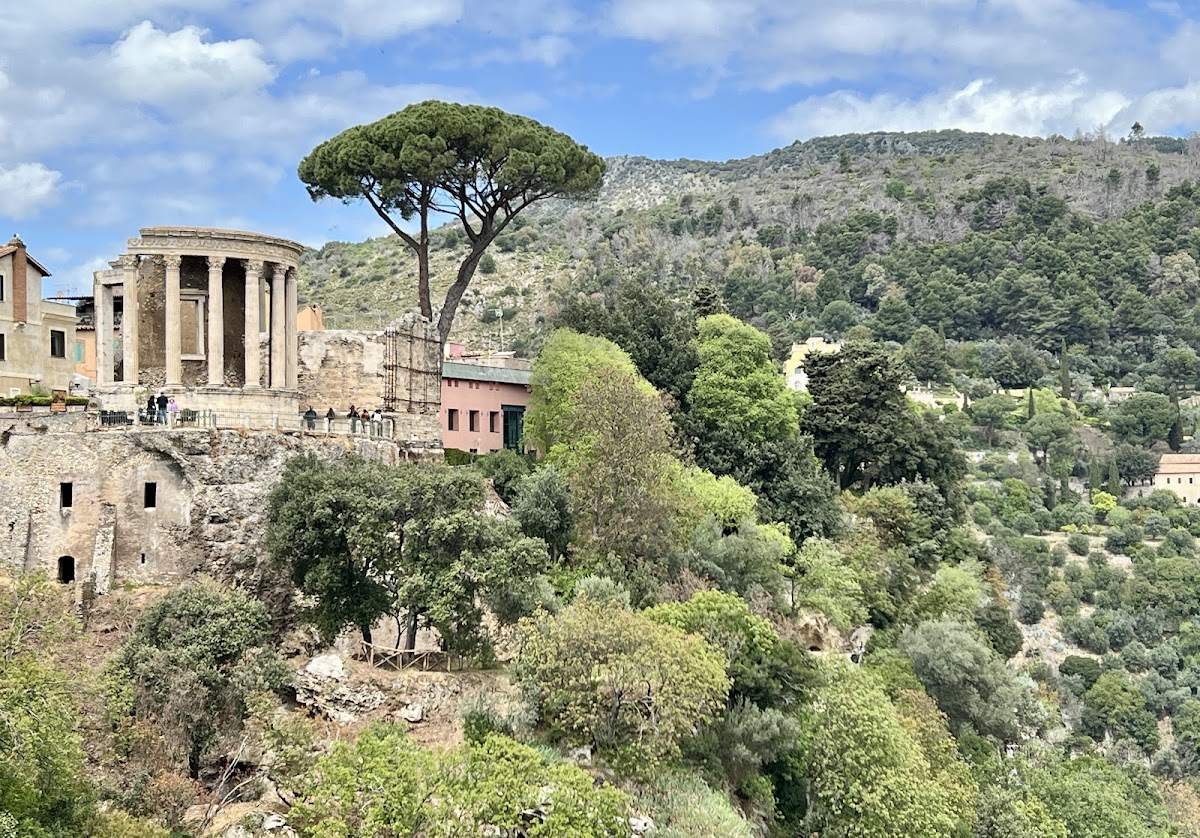
Terracina sits where the Lazio coast meets the Aurunci mountains — a layered Roman-medieval-modern town with a remarkable Roman forum (the cathedral of San Cesareo was built directly into the Capitolium of the Roman forum, still using the original columns) and the dramatic Temple of Jupiter Anxur (€3) on the mountain above the town, the supreme example of Roman temple-on-a-cliff staging. Gaeta is further south — a medieval seaside town with a Norman castle, the Montagna Spaccata sanctuary (a cleft mountain with a chapel inside the rock), and the famous Aragonese castle on the headland. Food along this coast is Tyrrhenian seafood — sea-urchin pasta (spaghetti ai ricci), fritto misto, raw red prawns, octopus salad, plus mozzarella di bufala campana when you get to Fondi/Gaeta. The Sperlonga Trattoria del Pescatore and Gaeta's Antico Vico are institutional addresses. Avoid coastal seafood restaurants with menus in 4 languages.
Logistics — when to go, where to stay, budget
When to go: June and September are the sweet spot — warm water, no crowds, full operations. July-August is when Romans fill the coast — beach establishments charge premium prices, restaurants book out, traffic is heavy. Avoid the August 15 Ferragosto weekend at all costs. May and October are quiet but beach establishments are mostly closed and water is cool. November-April is off-season; many places shut entirely. How long: weekend covers one base (Sperlonga or San Felice Circeo). 4-5 days does the full coast plus the national park hikes. Where to stay: Sperlonga has small hotels in the historic centre (€100-180/night in summer, €70-110 shoulder season). San Felice Circeo is upmarket (€150-300). Sabaudia is mostly summer rentals. Gaeta has midrange options (€80-130). Budget for a weekend, two people: €450-700 depending on season and beach establishment choices.
Frequently asked questions
Which is the best beach on the Lazio coast?
It depends on what you want. Cleanest water: Sabaudia and the Circeo national park beaches — the dune protections keep development away. Most photogenic: Sperlonga, the white-walled town overlooking two crescent beaches. Wildest: the Sabaudia beach south of Torre Paola, 5+ km of unbroken dunes. Most upmarket: San Felice Circeo. Most family-friendly: the Sperlonga northern beach (Levante) with shallow water and public access. Avoid the highly developed Anzio-Nettuno area unless you specifically want a noisy resort atmosphere.
Is the Lazio coast worth visiting outside summer?
Yes, for different reasons. May, October and even March-April work well for Sperlonga (the village is the attraction, not just the beach) and Monte Circeo (the hiking trails are best in cool weather). November-February is too cold for swimming and many establishments close, but the towns are atmospheric and prices drop 50-60%. Avoid winter weekends with heavy rain — the SS148 Pontina becomes treacherous and the coastal roads are exposed.
Can you visit the Lazio coast as a day trip from Rome?
Yes for a single town — Sperlonga is reachable by car (2 hours) or by train+bus (Fondi station + bus, total 1h45). San Felice Circeo is harder by public transport but possible by car (1h30). Sabaudia is also feasible by car. But day-tripping the coast feels rushed — most of the value is in slow lunch, swimming, evening passeggiata. Stay at least one night. The 'day trip to one town' that works best is Sperlonga.
How crowded does the coast get in August?
Heavily — Romans treat August as the official beach month and most of the city decamps to the coast. Beach establishments at Sperlonga, San Felice and Gaeta book out completely on weekends. Restaurants need bookings 48+ hours ahead. Parking in town centres requires arrival before 9:00 or after 18:00. The August 15 Ferragosto weekend is the absolute peak — avoid unless you specifically want the festival atmosphere. The Sabaudia beach absorbs the crowds better because it's so long.
What's the difference between Sperlonga and the Amalfi Coast?
Sperlonga is what the Amalfi Coast was 40 years ago — authentically Italian, mid-priced, low international tourism. The Amalfi Coast has more spectacular cliffs and famous towns; Sperlonga has cleaner water and lower prices. A Sperlonga weekend (food, hotel, beach) costs roughly 50-60% of an equivalent Positano weekend. The drawback: less dramatic landscape — long stretches of flat coastal pine forest rather than the vertical Amalfi cliffs. For first-time international visitors who specifically want the postcard, Amalfi wins. For repeat travellers and Italians, Sperlonga.
Are the Pontine Islands accessible from the Lazio coast?
Yes. Ferries to Ponza and Ventotene depart from Anzio, Terracina, and Formia. Anzio is the most frequent departure (Laziomar, Vetor, hydrofoils 70 minutes, €25-40 one-way). Ponza is the larger and more developed island; Ventotene is smaller, quieter, and historically the prison island for Roman empresses and 20th-century anti-fascists. A day trip from Anzio to Ponza is possible (depart 8:30, return 18:00) but tight. Better: two nights on Ponza combined with the Lazio coast trip.
Can you hike Monte Circeo without a guide?
Yes. The Picco di Circe trail starts in San Felice Circeo and follows a marked path to the summit (541 m). The route is 2 hours up, 1.5 hours down, with some scrambling near the top. Total elevation: 540 m. The trail is exposed (limestone reflecting sun) — bring 2 litres of water per person, sunscreen, hat. Skip if rain (the limestone gets slippery). The view from the top extends to the Pontine Islands and on exceptional days to Vesuvius. A more accessible alternative is the Sentiero del Litorale along the dunes and lakes — 4-6 hours flat, suitable for any fitness level.
Plan your trip
Build your itinerary