The Great St. Bernard is a place of legend and contemplation, where the famous Benedictine hospice has welcomed pilgrims and travelers for over a thousand years. This alpine pass fascinates with its lunar landscapes, the St. Bernard dogs that come alive from collective memory, and a silence that seems suspended between sky and earth. Coming here means touching the very history of the Aosta Valley and understanding the courage of the monks who chose this extreme solitude.

The Territory
The Gran San Bernardo rises at 2,469 meters, the oldest Alpine pass between the Aosta Valley and Swiss Valais. The landscape is dramatic: jagged gray rocks, treeless alpine meadows, crystalline blue glacial lakes that reflect the ever-changing sky. In the summer months, the pastures are tinged with gentians and edelweiss; in winter, avalanches and eternal snows transform the pass into an almost inhospitable realm. The Loché lakes and the small Gran San Bernardo Lake complete a fragile and fascinating ecosystem. The local flora and fauna have adapted to the extremes: marmots, golden eagles and chamois dominate this theater of rock and ice where time seems to stand still.

History and Folklore
Founded in 1049 by the Benedictine monk Bernard of Aosta, the hospice of the Great St. Bernard represents an unparalleled enterprise of faith and human solidarity. During the Middle Ages, the Benedictine monks residing here saved countless pilgrims from storms and cold, becoming the guardians of Alpine charity. The legend of the St. Bernard dogs originates right here: in the 17th century, the monks bred these mastiffs to locate travelers lost in the snow. The village of Saint-Pierre, at the foot of the pass, preserves local traditions and the memory of this centuries-old coexistence between man and mountain. Today the hospice remains operational, a living witness to a dedication that has spanned eleven centuries.

What to Eat
The cuisine of Gran San Bernardo is the robust cooking of alpine dairies and peasant traditions. Fontina DOP, the noblest cheese of the Aosta Valley, dominates every table: creamy, with hazelnut aroma and buttery notes, perfect in fondue or simply eaten with a knife. Lard d'Arnad DOP, this characteristic smoked speck, accompanies dishes of creamed polenta and mountain frogs. The Toma DOP is also present, a semi-aged cheese with a more delicate flavor. Local dishes such as soupe à l'oignon and gnocchi with game ragù transform simple ingredients into masterpieces of mountain sustenance.

What to Drink
The wines of the Valle d'Aosta DOCG accompany alpine evenings with sober elegance. The Torrette DOCG, a deep red with silky tannins, is the ideal companion to fondue and smoked meat. For those who prefer whites, the Enfer d'Arvier DOCG offers minerality and freshness. On the high plateaus of the pass, Valle d'Aosta grappa (not DOCG but artisanal) represents the traditional digestif, distilled from local grape pomace using age-old technique. An infusion of alpine herbs, prepared by monks, concludes the evenings with notes of gentian and artemisia. Not to be missed is a drink from the Grolla dell'Amicizia. A beverage made of liqueur and coffee enjoyed in a convivial manner from the historic wooden vessel.
When to Go
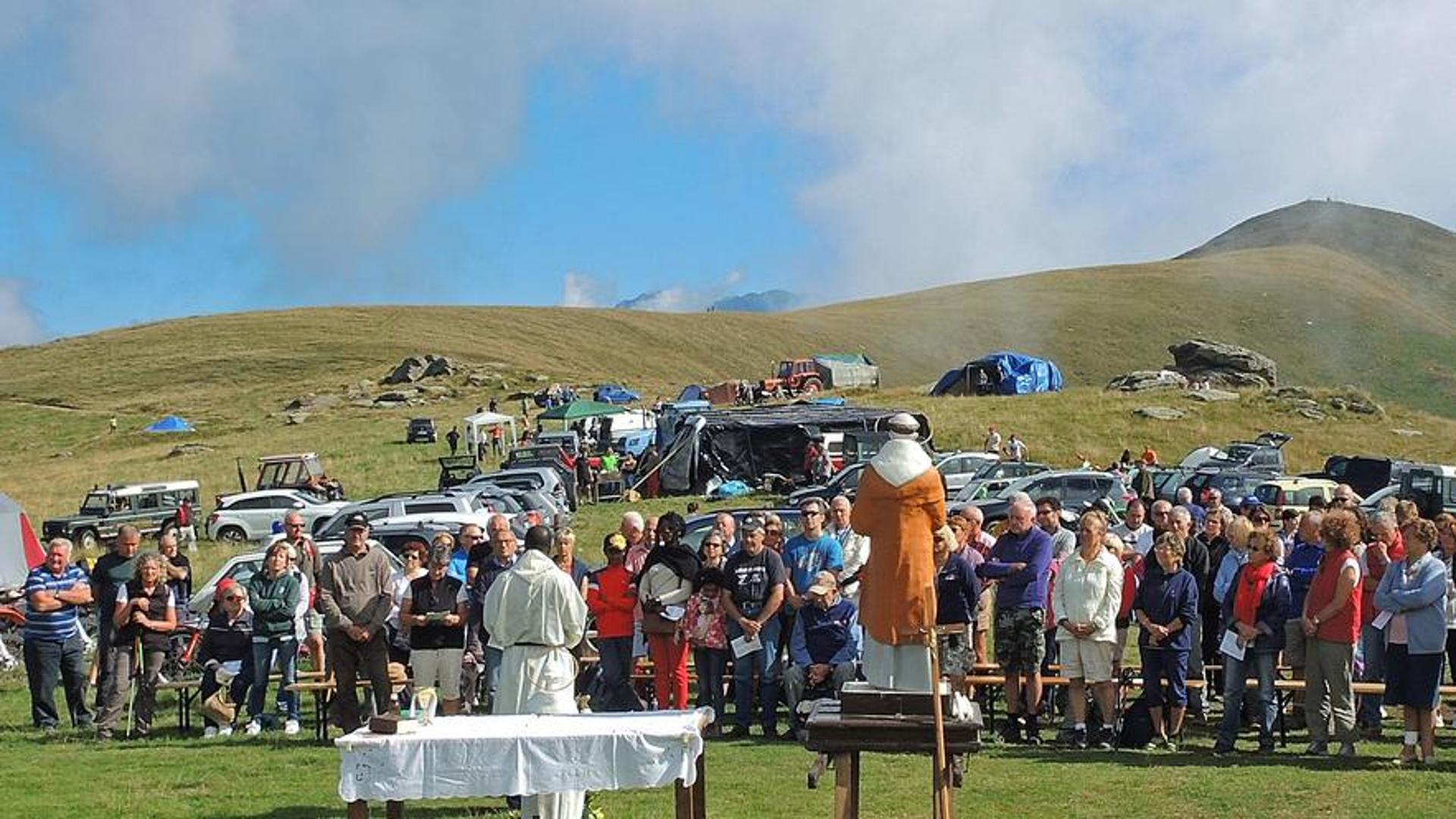
Summer (June-September) is the golden season: the trails are clear of snow, the alpine lakes reach their most vivid color, and the meadows burst with flowers. The Feast of Saint Bernard (May 15) celebrates the patron saint with local processions. August brings open-air concerts at the hospice. Autumn (September-October) offers sophisticated colors and contemplative solitude. Winter makes the pass often inaccessible, even though the silence is almost mystical. Spring (May) sees nature's awakening with still-cold temperatures but increasing brightness.

Places Not to Miss
The Hospice of Gran San Bernardo remains the beating heart: visit the chapel with its medieval frescoes, the museum documenting a thousand years of monastic history, and if fortunate, meet the historic breed dogs. Lake Gran San Bernardo, just a few minutes' walk away, offers legendary tranquility where the mountain's reflection touches the border with infinity. The village of Saint-Pierre, down in the valley, preserves the Romanesque parish church and authentic rural traditions, a starting point for excursions towards the Nivolet pastures.
Practical tips
Book your overnight stay at the hospice well in advance: rooms are limited and nights in the Alps remain unforgettable. Call the number +41 27 787 1236.
Bring layers of clothing: the climate changes rapidly and the temperature can drop by 10°C in just a few minutes. A waterproof jacket is essential even in summer.
Visit the Monument to the Saint Bernard Dogs at the Pass: this commemorative sculpture tells the centuries-old dedication of these four-legged rescuers. It is the most moving way to understand the history of the place.
Plan your trip
Personalised day-by-day itinerary in 5 minutes — restaurants, hotels, live events.
Plan now