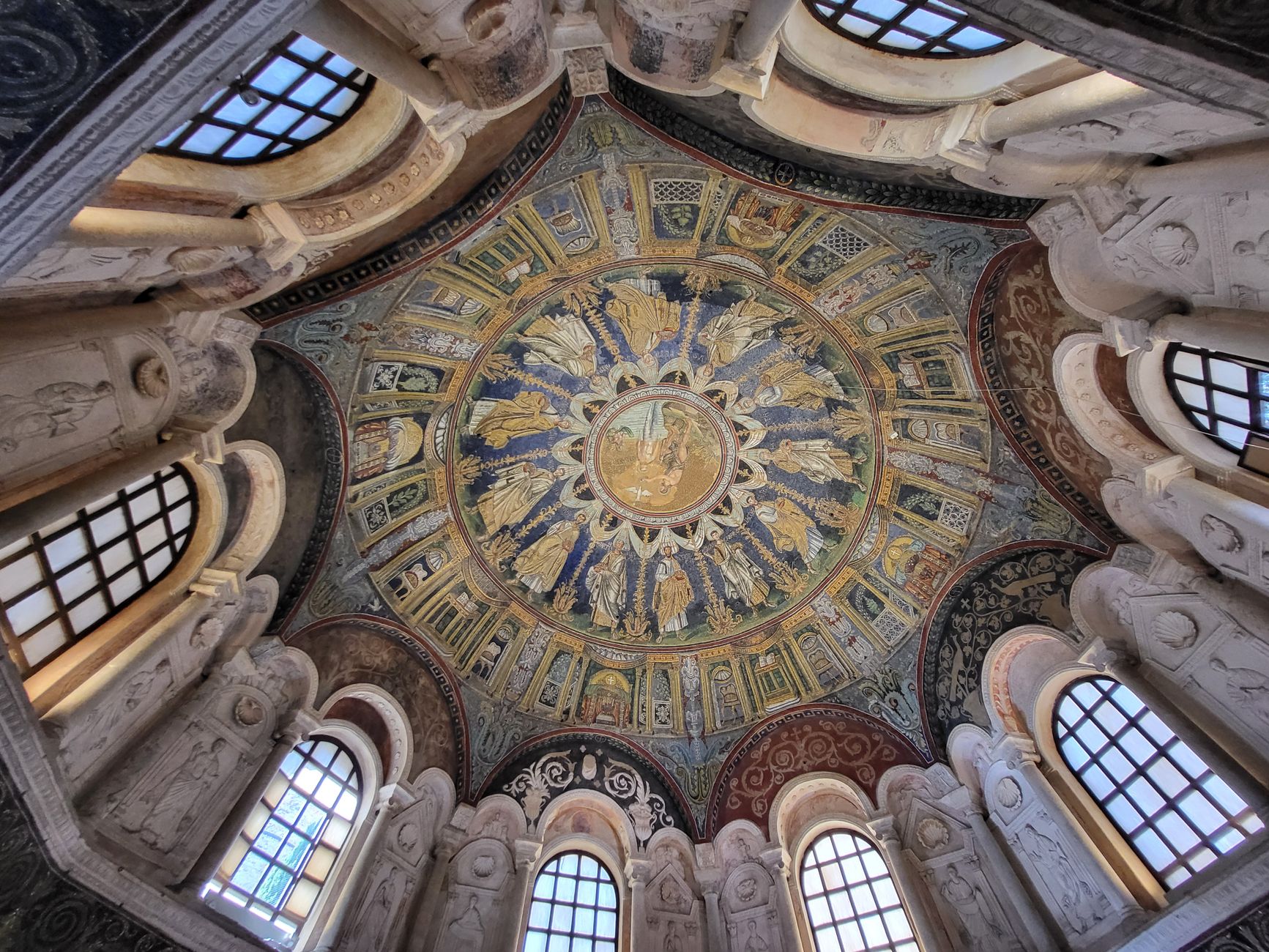
Ravenna and Romagna offer a complete sensory experience: basilicas gleaming with golden mosaics capture light like living relics of the Roman East, while rolling countryside yields treasures that have made this region world-famous. Here time flows between Giotto's masterpieces in Rimini, the medieval atmosphere of Faenza, and vineyards producing Emilia's most elegant wines.
The Landscape
Ravenna and Romagna occupy the Adriatic coast of Emilia-Romagna, where the Apennines slope gently toward the sea. The alluvial plains of the Adriatic transform into the soft hills of inland Romagna, dotted with fortified villages like Brisighella and Saludecio. The territory ranges from the coastal landscape of Cervia and Marina di Ravenna to the winding valleys around Faenza and Forlimpopoli, where red clay badlands emerge. This geographic diversity has created unique microclimates: the temperate sea breeze mingles with continental currents, fostering rich vegetation and extraordinary viticulture. The rivers Lamone, Montone, and Savio shape the landscape, creating wetlands of great natural value.
History and Folklore
Ravenna was capital of the Western Roman Empire from 402 to 476 AD, and this imperial past is inscribed in its incomparable mosaics. The city preserves eight UNESCO sites, including the Mausoleum of Theodoric and the Basilica of San Vitale, testifying to early Christian artistic genius. Local legend speaks of Dante Alighieri, who found refuge in Ravenna in his final years, completing the Divine Comedy here. Inland Romagna cherishes memories of medieval signories: the Malatesta of Rimini, the Manfredi of Faenza, and the Da Polenta of Ravenna ruled these territories with Renaissance zeal. In the countryside survive sagas of romantic brigands and witch stories, while Ravenna's Carnival maintains ancient pagan traditions.
What to Eat
The cuisine of Ravenna and Romagna is a hymn to simplicity elevated to art. Tortellini di Castel Bolognese DOP arrive at table with meat and Parmigiano-Reggiano filling, while Parmigiano Reggiano DOP from Forlimpopoli adds a golden aura to every dish. Prosciutto di Parma DOP accompanies toasted bread in warm Romagna mornings. Tradition says to taste Balsamico Tradizionale di Modena DOP on Faenza strawberries, and Arborio rice for risottos gilded with saffron. The brodetto romagnolo, a dense and comforting fish soup, represents the land's bond with the Adriatic.
What to Drink
Romagna's wines breathe the region's soul: Sangiovese di Romagna DOCG is the supreme expression of tannic elegance, with finest labels from Forlì and Cesena. Trebbiano di Romagna DOC offers delicate, mineral white wisdom. For more structured reds, Barbarossa di Santa Maria del Piano DOCG enchants with complexity. Pignoletto from Colli Bolognesi DOC, just beyond the border, is the perfect companion wine. Sweet and sparkling Lambruschi close meals with characteristic Romagna frivolity.
When to Visit
Spring (April-May) transforms Ravenna into a living garden, perfect for exploring mosaics without oppressive heat. The Ravenna Festival (June-August) brings operatic and theatrical performances to historic basilicas. Summer welcomes the Rimini Summer Carnival (August) with floats and costumes. Autumn (September-October) offers harvest in Romagna vineyards, while the International Ceramics Exhibition in Faenza (September-October) celebrates craft traditions. Winter gifts contemplative solitude and Ravenna's Christmas markets.
Places Worth Visiting
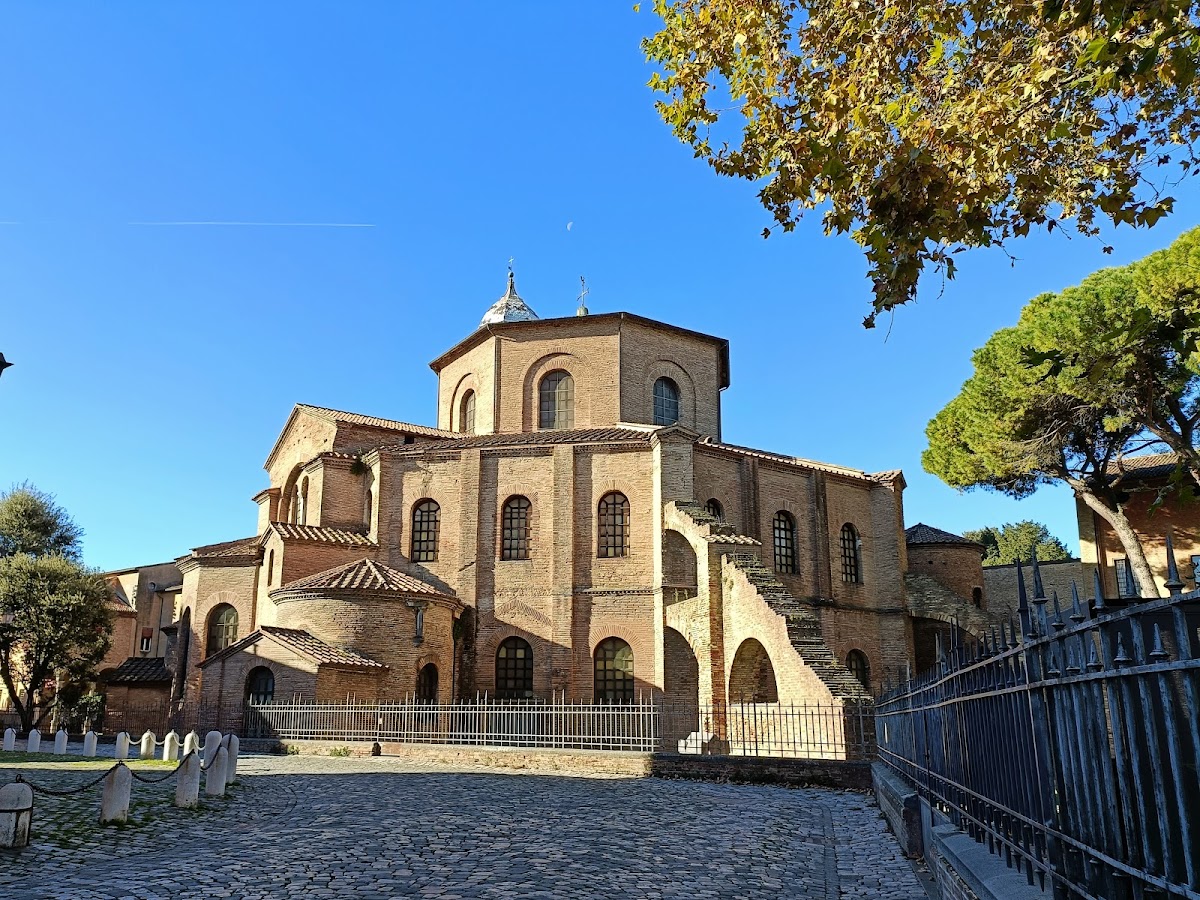
The Basilica of San Vitale in Ravenna is one of Europe's most extraordinary early Christian treasures, with mosaics of Empress Theodora glowing like jewels of light. In Faenza, the International Museum of Ceramics houses masterpieces from medieval to contemporary periods, confirming the city as the world capital of artistic ceramics. Brisighella, perched on hills between three fortresses, enchants with medieval covered streets and views toward the Adriatic.
Practical tips
Buy the Ravenna Card to access all eight UNESCO sites with a single ticket and save significantly.
Visit the vineyards of Forlì and Cesena during harvest (late August-September) for an immersive experience among the vines.
Don't miss Faenza's artisan workshops where ceramicists still create by hand following century-old traditions.
Plan your trip
Personalised day-by-day itinerary in 5 minutes — restaurants, hotels, live events.
Plan now