Northeast Italy is a geographic story where every chapter magnificently contradicts the one before. Within a matter of days you pass from the Roman marble of Verona to the glacial waters of Lake Garda, from the painted bell towers of Trento to the pale Dolomite walls that burn rose-pink at sunset, from the dreaming lagoon of Venice to Trieste — a frontier city where Italy ends and mitteleuropean Europe begins. It is an itinerary of continuous transitions, of impossible climates that coexist, of languages that change from valley to valley.

The Roman Gateway – Verona
The journey into Italy's northeast begins in Verona, a city of rose-coloured marble, sweeping river bends, and dramatic historical layers. Anchored along the curves of the Adige River, Verona acts as the grand southern gateway where the fertile plains of the Veneto first meet the rising foothills of the Alps. It is a city that balances architectural monumentalism with intimate, poetic romance, setting a refined tone for the wilderness that lies ahead. At the literal and metaphorical centre of Verona sits the Arena, a pink-limestone Roman amphitheatre that predates Rome's Colosseum. Remarkably preserved, its ancient arches do not stand as a dead ruin, but as a living cultural powerhouse, hosting world-class open-air opera beneath the summer stars. From the Arena, the city unfolds along Via Mazzini to the Piazza delle Erbe, a vibrant marketplace built over the ancient Roman forum. Here, Baroque palaces, frescoed Renaissance facades, and medieval tower houses crowd together above stalls selling fresh fruit and local wine. The Castelvecchio, a red-brick medieval castle built by the ruling Scaliger family, crosses the Adige on a series of elegant crenellated arches. To climb to the Castel San Pietro at sunset is to look out over a sea of terracotta rooftops, church bell towers, and cypresses, all bathed in Venetian golden light.

The Mediterranean Mirror – Lake Garda
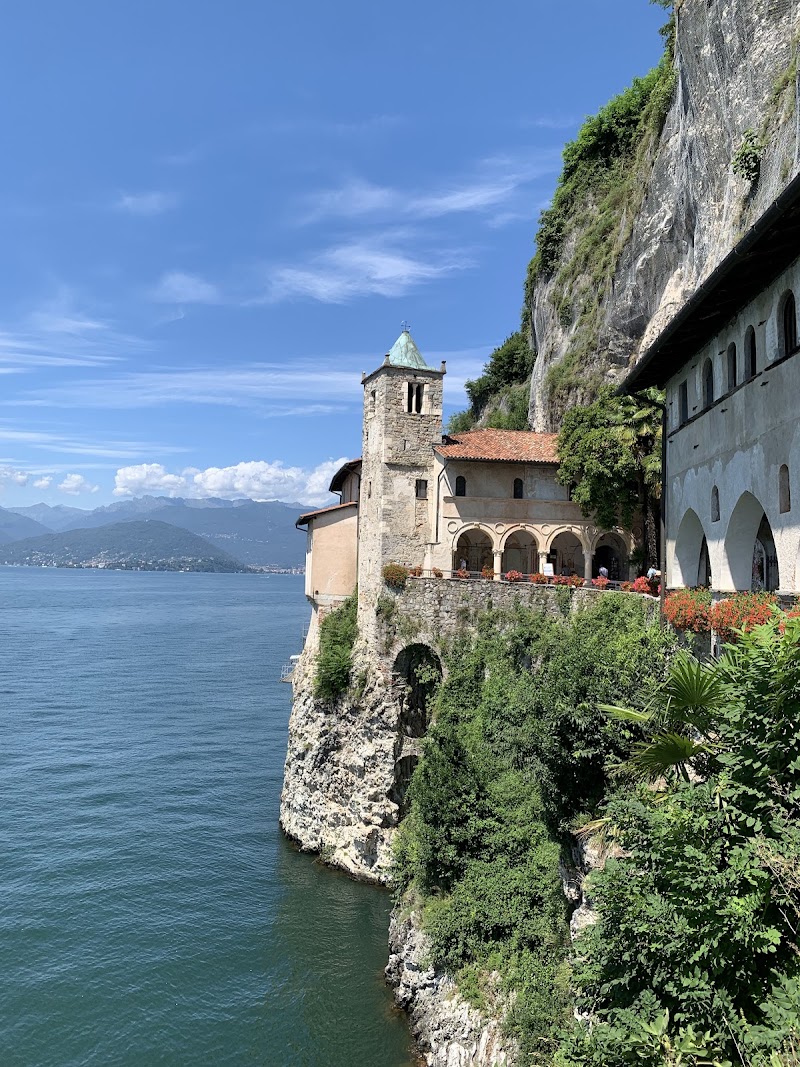
Leaving the marble streets of Verona behind, the landscape fractures into a breathtaking expanse of water and light as the journey reaches Lake Garda. As Italy's largest lake, Garda is a geographical marvel — a vast glacial mirror where a Mediterranean microclimate thrives at the absolute base of the Alps. Lemon trees, silver olive groves, and rows of palms flourish beneath the shadows of snow-capped peaks, creating a surreal landscape of alpine water and southern warmth. The exploration begins on the southern shore at Sirmione, a narrow peninsula that juts three kilometres into the liquid blue of the lake. Guarded by the moated towers of the Scaliger Castle, Sirmione is a labyrinth of cobblestone lanes leading to the Grotte di Catullo, the monumental ruins of an ancient Roman villa perched on a cliffside over the water. Moving up the eastern shore, the Riviera degli Olivi grows steeper; at Malcesine, a rotating cable car ascends from the lakeside to the ridge of Monte Baldo. On the western shore, the Riviera dei Limoni showcases historic lemon houses — ingenious stone terraces built against the cliffs to protect citrus crops. At the northern tip, Riva del Garda, the lake narrows into a dramatic fjord-like canyon where sheer rock faces plunge directly into deep water.

The Alpine Crossroads – Trento and Merano
As the journey follows the Adige River north, the valley narrows sharply into a dramatic corridor of limestone cliffs and vineyards, arriving in the historic city of Trento, capital of the Trentino region. This city represents a profound cultural shift — the definitive crossroads of the itinerary, where Italian Renaissance elegance seamlessly fuses with Germanic alpine tradition. For centuries Trento was a semi-independent prince-bishopric, a strategic frontier town that hosted the famous Council of Trent, which reshaped the Catholic Church in the 16th century. Trento's historic centre is a revelation of painted architecture. The Piazza Duomo is widely considered one of the most beautiful squares in the Alps, dominated by the Cathedral of San Vigilio and the late-Renaissance Fountain of Neptune. Its case dipinte — palaces whose outer walls are entirely covered in magnificent colourful Renaissance frescoes — turn the streetscape into an open-air art gallery. Looming over the city is the Castello del Buonconsiglio, the monumental fortress-palace of the prince-bishops. Inside its walls, the Aquila Tower preserves the Cycle of the Months, one of the world's finest masterpieces of International Gothic fresco painting. Pushing further northwest, the transition to the high alpine world reaches its softest edge in Merano. This elegant spa town is nestled in a sunny basin where a Mediterranean microclimate thrives at the base of the high Alps. Promenade walkways lined with palms and winter gardens sit directly beneath snow-dusted peaks. After a morning in the manicured botanical terraces of Castel Trauttmansdorff, you turn eastward, leaving the valleys to ascend into the vertical kingdom of stone.

The Pale Giants – The Dolomites, Day 1: The High Meadows and Ladin Valleys
Declared a UNESCO World Heritage site, the Dolomites are not ordinary mountains. Composed of ancient fossilised coral reefs thrust into the sky by tectonic forces, they are characterised by sheer limestone walls, jagged pinnacles, and monumental towers that rise abruptly from soft green alpine meadows. They possess a unique pale quality that changes colour throughout the day, glowing fiery pink and deep orange at sunset in a phenomenon locals call enrosadira. The high-altitude expedition begins by driving through Bolzano, the gateway to the mountains, to reach the spectacular Alpe di Siusi — Europe's largest high-altitude alpine meadow, a surreal expanse of rolling green pastures dotted with rustic wooden hay barns, entirely framed by the jagged peaks of the Sassolungo and Sciliar. Because private traffic is restricted, an aerial cable car whisks you into the silent majesty of the meadow. As afternoon light shifts, you descend into Val Gardena, a valley of three pristine mountain villages: Ortisei, Santa Cristina, and Selva. This valley is the historical home of the Ladin people and world-renowned for its centuries-old tradition of intricate woodcarving.

The Dolomites, Day 2: The Sella Ronda
The second day is dedicated to the Sella Ronda, a spectacular circular route that skirts the gargantuan fortress-like limestone massif of the Sella Group — arguably one of the most beautiful drives in the world, crossing multiple high-altitude mountain passes in rapid succession. Leaving Selva, you immediately tackle the hairpin turns of the Passo Sella (2,244 metres), where the sheer walls of the Sassolungo feel close enough to touch. From Sella you snake downward, then climb to the Passo Pordoi (2,239 metres). At the top of Pordoi, a cable car ascends to the Sass Pordoi plateau (2,950 metres) — the Terrace of the Dolomites — offering a 360-degree panoramic view of the highest peaks, including the snow-capped Marmolada glacier. Descending from Pordoi, you loop through the greener Passo Campolongo into the high valley of Alta Badia and the village of Corvara for an evening of hearty Ladin cuisine.

The Dolomites, Day 3: Through the Front Lines to the Queen
On the final day of the mountain crossing you conquer the remaining eastern passes. Begin the morning ascending the Passo Gardena (2,136 metres), where the early sun turns the pale limestone of the Cir peaks into shades of cream and pink. From there you cut toward the Passo Falzarego (2,105 metres) — not only a natural wonder but a historical one: during World War I, this rugged terrain was the front line between the Italian and Austro-Hungarian empires. A cable car takes you up to Monte Lagazuoi to explore the extraordinary open-air museum of trenches and tunnels carved directly into sheer cliff faces by soldiers over a century ago. Leaving Falzarego, the road winds down into a wide, sun-drenched amphitheatre of stone, arriving at Cortina d'Ampezzo — the Queen of the Dolomites — a city that beautifully blends high-altitude alpine drama with Italian high fashion along its pedestrianised Corso Italia.

The Floating Mirage – Venice
Descending from the alpine heights of Cortina, the mountains slowly flatten into the rolling hills of the Prosecco wine region, eventually dissolving into the vast watery horizons of the Adriatic lagoon. The grand finale of the journey is Venice, a city that seems to defy the laws of physics. If the Dolomites represent the raw, unyielding power of stone, Venice is the ultimate expression of human audacity — a magnificent stone palace built upon millions of wooden piles driven into a shifting salt marsh. Arriving in Venice from the mountains is a surreal sensory experience. The sound of cars is replaced by the lapping of water, the tolling of distant bells, and the hum of boat engines. The city's main highway is the Grand Canal, a sweeping S-shaped ribbon of water lined with over two hundred dazzling Byzantine, Gothic, and Renaissance palaces that look like frozen lace reflecting in the green tide. At the city's spiritual and political heart lies Piazza San Marco. St Mark's Basilica, with its glittering golden mosaics and exotic domes, feels more like an Eastern dream than a Western church. Next to it, the Doge's Palace, clad in pink-and-white Verona marble, recalls the city's sophisticated centuries-old republic. Yet the true magic of Venice is found by getting lost in its labyrinth of quiet calli, crossing arched stone bridges over silent canals, and stumbling upon hidden campi where children kick footballs against ancient church walls.
The Edge of the World – Trieste
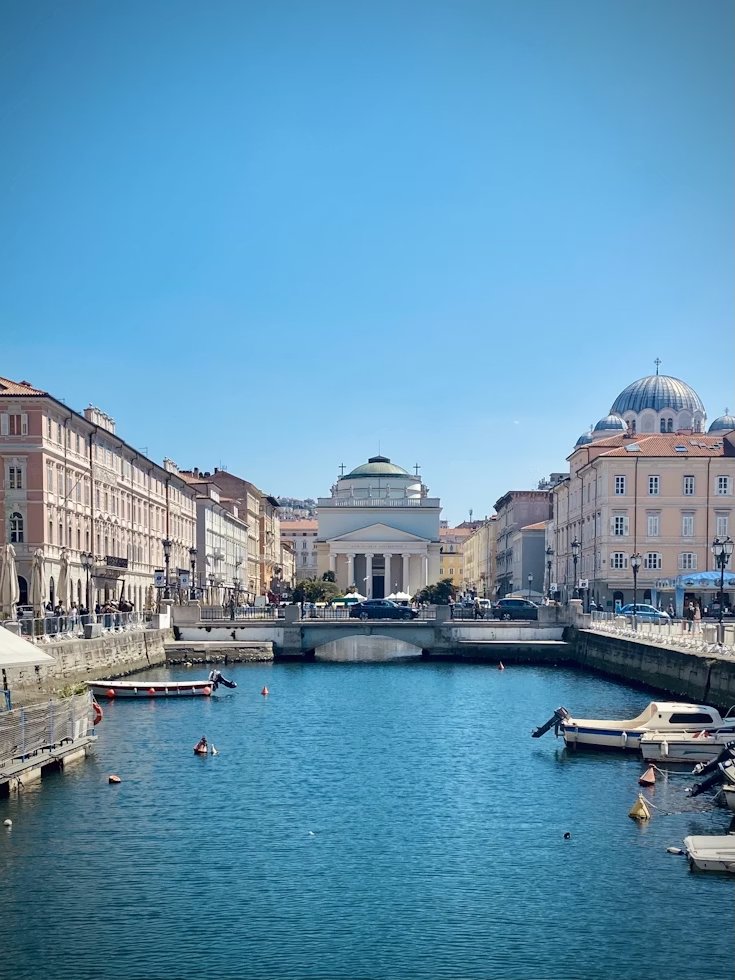
Arriving in Trieste after the dreamlike unreality of Venice is a clarifying jolt — a return to solid ground, sharp geometry, and the bracing smell of the open sea. This is Italy's most un-Italian city: a Habsburg port built in neoclassical grandeur, a literary capital haunted by the ghosts of James Joyce and Italo Svevo, a place where the wind has a name — the bora, a fierce cold blast from the northeast that can arrive without warning and push grown men sideways across the Piazza Unità. Where Venice dissolves into its own reflection, Trieste stands with unflinching clarity at the very edge of the peninsula, facing east toward Slovenia, the Balkans, and the long cultural memory of Austria-Hungary. The city's defining image is the Canal Grande: a narrow neoclassical waterway that cuts into the heart of the city from the harbour, flanked by pale Baroque palazzi and presided over by the white dome of the Church of Sant'Antonio Nuovo. It is modest by Venetian standards, but that is precisely the point — Trieste's beauty is ordered, measured, slightly severe. A few minutes' walk brings you to the Piazza Unità d'Italia, one of Europe's largest sea-facing squares, where four enormous buildings of different centuries face the open Adriatic across a plain of white stone. In the early morning, when the square is empty and the light comes low and golden off the water, it produces a quality of silence that the more famous squares of Italy rarely achieve. Trieste's coffeehouse culture is another world entirely. The city has its own coffee vocabulary — you do not order a caffè here; you ask for a nero, a capo in B, a goccia — each term a marker of Trieste's long Viennese inheritance. Settle into the wood-panelled interior of the Caffè San Marco, opened in 1914, where James Joyce corrected proofs of Ulysses at a corner table, and you understand in one sitting why this border city produced some of the 20th century's most searching literary minds.

Miramare and the Carso – Trieste Beyond the Canal
Two kilometres outside the centre, perched on a cliff of white limestone directly above the sea, stands Miramare Castle — the most romantic monument on the entire traverse. Built between 1856 and 1860 for Archduke Maximilian of Austria, the white fairy-tale fortress seems to emerge from the water itself, its crenellated towers reflected in the emerald-green waters of the Gulf of Trieste. The interior preserves its original rooms in extraordinary detail: the nautically inspired bedroom of the Archduke, the Moorish-style throne room, the Chinese salon. The surrounding park of parasol pines, magnolias, and age-old Scots pines tumbles down to the water, offering views on clear days to the white karst plateau of the Slovenian coast. Beyond Miramare, the hinterland opens onto the Carso — the dramatic karst plateau that rises steeply behind Trieste, a stony, wind-blasted landscape of sinkholes, dry stone walls, and the most interesting red wine in Friuli Venezia Giulia. The native Vitovska grape produces whites of startling mineral intensity; its Terrano — a dark, iron-rich red — is unlike anything else in Italy. To end the journey here, in a small osteria on the plateau with a glass of Terrano and the lights of Trieste visible in the valley below, is to understand why this improbable edge of the world has always drawn writers, wanderers, and dreamers in disproportionate numbers.
Practical tips
For maximum flexibility, travel Verona–Trento by train and rent a car in Trento only for the Dolomites section, dropping it in Venice or Trieste. You avoid the motorway and save on rental days.
Check Dolomite pass conditions before you leave — Pordoi, Falzarego, and Sella can be closed November to May. The website viabilita.altoadige.it gives real-time road status.
The enrosadira — the Dolomites' famous pink-to-orange alpenglow at sunset and dawn — is most vivid from the high passes. Set an alarm for both; it rewards every lost hour of sleep.
In Trieste do not order a caffè — ask for a nero (espresso), a capo in B (cappuccino in a glass), or a goccia (espresso with a drop of milk). Anything else instantly marks you as a tourist.
Do not drive into Venice — park at Piazzale Roma or Tronchetto (€20–30 per day) and continue on foot or by vaporetto. Beyond the causeway, the city has no roads.
Book Verona Arena opera tickets months in advance for the summer season (June–September). Standing-stone seats (gradinata) cost a fraction of numbered seats and are equally spectacular.
Frequently asked questions
How many days do you need for the Grand Italian Traverse?
10–14 days is the ideal window: Verona 2 nights, Lake Garda 1–2 nights, Dolomites 3 nights (essential minimum), Venice 3 nights, Trieste 2 nights. 7 days is possible but means either skipping the Dolomites (wrong choice) or rushing Venice (also wrong). If you have only 7 days, do Venice, Verona, and Trieste and save the Dolomites for a dedicated trip.
When is the best time to visit the Dolomites?
Late June to mid-September for hiking: trails are snow-free, rifugi are open, and the light on the pale rock is extraordinary. July and August are peak season — the main valleys and the Tre Cime di Lavaredo are crowded; go early (7am trailheads) or choose lesser-known areas like the Dolomiti di Brenta or the Pale di San Martino. Late September is the best compromise: trails quiet, autumn colour beginning, rifugi still open to mid-October. December–March for skiing: Alta Badia, Cortina, Val Gardena, and the Sella Ronda circuit are world-class.
Is Venice worth the cost?
Yes — but you need to manage it strategically. Venice in July and August with peak hotel prices (€200–400/night for a mid-range room) and 80,000 daily visitors is a different city from Venice in November or January (€80–150/night, misty, quiet, locals visible again). The single biggest cost control: stay in Mestre on the mainland (€60–90/night) and commute by train (4 minutes, €1.45). You lose the experience of sleeping in the city but gain a functional budget. The city itself — the Frari, the Accademia, the Querini Stampalia, wandering the sestieri at 7am — justifies every euro.
Is Trieste worth the detour?
Absolutely — and it is not a detour, it is the logical conclusion of the traverse. Trieste is one of the most underrated cities in Italy: a place where Central European café culture (Caffè San Marco, the oldest in continuous operation since 1914), Hapsburg imperial architecture, Slovenian mountain food, and Italian language coexist on a dramatic karst coastline. It is 2 hours from Venice by train, has no queues for anything, excellent accommodation at half the Venice price, and a character completely unlike anywhere else in the country. Joyce wrote much of Ulysses here. Rilke wrote the Duino Elegies 12 km up the coast. It earns its place.
Do you need a car for this traverse?
Partially. Verona, Venice, and Trieste are best without a car — ZTL zones, expensive parking, and excellent train connections (Verona–Venice 1h 10′, Venice–Trieste 2h, both by Freccia or regional). The Dolomites require a car or organised transfers: the mountain passes (Sella, Gardena, Falzarego) are inaccessible by public transport in meaningful combinations, and having your own vehicle to stop at pull-offs for the views is essential. Rent a car in Verona at the start, use it for Garda and the Dolomites (3–5 days), drop it in Venice before boarding the train to Trieste.
What is the bora wind in Trieste?
The bora is a cold, dry, extremely violent katabatic wind that descends from the Karst plateau above Trieste and accelerates through the city's streets toward the sea. It blows primarily from the northeast in autumn and winter, reaching gusts of 100–170 km/h in the strongest events. The city has iron handrails bolted to walls along the most exposed streets to help pedestrians stay upright. Locals consider it a point of pride — the bora is woven into Trieste's identity as deeply as its coffee culture. If it blows during your visit, the seafront spectacle and the sensation of the city under meteorological siege is genuinely unforgettable.
What is Verona worth beyond Romeo and Juliet?
Considerably more than the tourist circuit suggests. The Roman Arena is one of the best-preserved amphitheatres in the world and still hosts opera performances in summer (the Arena di Verona Opera Festival, July–August, tickets €30–250). The Castelvecchio museum (€6, Andrea Mantegna and Paolo Veronese collections) is one of the finest regional art museums in Italy. The Adige river bend enclosing the historic centre, viewed from the Ponte Pietra or from above at Castel San Pietro, is among the most beautiful urban panoramas in northern Italy. Verona deserves 2 full days — most visitors give it half a day and see almost nothing.
Garda or Como for a day on the lakes?
They serve different purposes. Lake Garda is larger, warmer, more varied — the southern end (Sirmione, Peschiera) is Roman ruins and thermal spas; the western Gardesana is dramatic cliffside road and lemon groves; the northern end is windsurfing country. Garda fits naturally into this traverse as it lies between Verona and the Dolomites. Lake Como is smaller, more intimate, more aristocratic in character — Bellagio, Varenna, Villa Carlotta. For this specific traverse, Garda is the logical choice. Como belongs to the northwestern loop itinerary instead.
What is the Miramare Castle in Trieste?
Miramare is a white, neo-Gothic castle built between 1856 and 1860 by Archduke Maximilian of Austria on a rocky promontory 8 km north of Trieste, directly above the Adriatic. Maximilian had it built as his primary residence before he was persuaded — fatally — to accept the imperial throne of Mexico in 1864. He was executed by firing squad in Querétaro in 1867. The castle and its terraced gardens (€10 combined, open daily) are among the most romantic and melancholy sites in Italy. The interior is a time capsule of Hapsburg taste frozen in 1864. Local sailors still refuse to spend the night on board a ship anchored under the castle — a superstition born from Maximilian's fate.
What food should you eat on this traverse?
Each territory has a signature: Verona — risotto all'Amarone (cooked in Amarone wine), bollito misto, pandoro. Lake Garda — freshwater fish (lavarello, tinca), lake trout, olive oil from the Garda DOP groves. Dolomites — canederli (bread dumplings in broth), speck Alto Adige IGP, Schlutzkrapfen (spinach and ricotta pasta half-moons), Lagrein wine. Venice — sarde in saor (sardines in sweet and sour onion marinade), baccalà mantecato (whipped salt cod on polenta), cicchetti at a bacaro (Venetian tapas bar) with an ombra (small glass of house wine, €1–1.50). Trieste — jota (bean, sauerkraut, and pork rib soup), prosciutto cotto in the Mitteleuropean style, the best coffee in Italy (the Triestine espresso is called a nero; a cappuccino is a capo in b).
Plan your grand traverse of northeast Italy
From Verona to Trieste in 10–14 stops — tailored itinerary in 5 minutes.
Plan now